

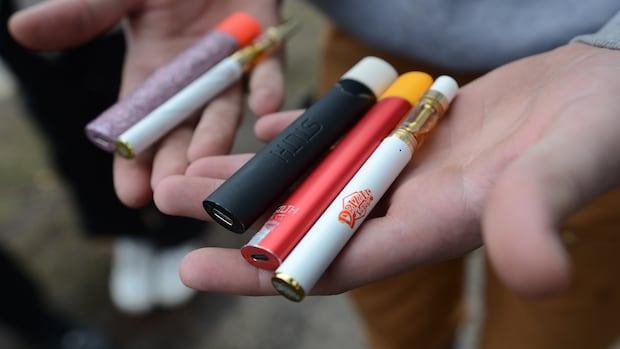
No. A cannabis cartridge bought from a licensed Canadian retailer does not contain nicotine. Federal rules under the Cannabis Act prohibit mixing nicotine into cannabis products, so what’s inside a legal cart is cannabis oil and nothing else of the kind. The confusion is understandable, though, because cannabis carts and nicotine vapes look alike on the surface. Here’s how they differ, what’s really in the tank, and how to read a label before you buy.
What the Law Says
Health Canada’s composition rules for cannabis extracts, the category that vape oil falls into, are clear that nicotine can’t be added. The same rules also restrict caffeine and alcohol in cannabis products, with only narrow exceptions. In practice, any cartridge on the shelf at a licensed store is nicotine-free and caffeine-free, whether it’s THC-dominant, CBD-dominant, or a blend.
This is one of the quieter benefits of buying from the regulated market. Every product comes from a federally licensed producer, goes through testing before sale, and arrives in standardized packaging. You can browse The Purple Leaf’s vape selection knowing those rules apply to everything on the page.
Why People Mix Them Up
Nicotine vapes and cannabis vapes share a lot of vocabulary: batteries, coils, mouthpieces, vapour. Both are compact and pocketable, and for years the word “vape” mostly meant nicotine. That overlap is where the mix-up starts.
Underneath, the products are built differently. Nicotine vapes use a thin, watery liquid and usually snap into a device made for that specific pod. Cannabis carts hold a thick, syrupy oil and typically use a standard 510 thread, a screw-in connection that attaches to a separate battery. Because the oil is so much thicker, it needs a battery that heats gently and evenly. Using a battery designed for thin nicotine liquid can scorch cannabis oil and flatten the flavour, so match your cart to a battery made for it.
What’s Inside a Cannabis Cartridge
Two things make up every cart: the oil and the hardware.
The Oil
The base is a cannabis extract carrying cannabinoids like THC and CBD. Depending on the product, you may also find:
Terpenes, the aromatic compounds that give a cart its scent and taste. Limonene reads as citrus, pinene as pine, myrcene as earthy and musky, and caryophyllene as peppery spice.
Carrier ingredients that help the oil flow smoothly.
Stabilizers that keep the product consistent over its shelf life.
Some oils keep the plant’s own terpenes through extraction. Others have terpenes added back after refining, sometimes from cannabis and sometimes from other botanical sources. Either way, the ingredient list on the package tells you what you’re getting.
The Hardware
The tank holds the oil, the coil heats it into vapour, and the mouthpiece is where you draw. Hardware matters more than most people expect. A well-made cart with properly sized intake holes and a quality ceramic coil can make a simple oil taste clean and smooth. Poorly matched hardware tends to clog or mute flavour.
The Rules Behind a Legal Cart
Keeping nicotine out is just one requirement among several. A few others shape what ends up in the tank:
Approved ingredients only. Beyond the extract itself, additions are limited to flavouring agents, carriers, and stabilizers, and for inhaled products they need to meet pharmaceutical-grade standards. That’s why legal carts don’t contain sugars, sweeteners, or colouring.
Even distribution. Cannabinoids and terpenes have to be mixed evenly so each draw is consistent with the last.
Size limits. Inhaled extract containers have a cap on how much they can hold, and extracts can’t exceed 1,000 mg of THC per container.
Contaminant limits. Products must stay within accepted thresholds for heavy metals and pesticide residues.
Hardware counts too. The filled cartridge is treated as a single product, so the hardware can’t be contaminated or add a characterizing flavour of its own.
Unregulated cartridges aren’t held to any of this, which is the main reason it’s hard to know what’s inside them.

Oil Types and How They Differ
Two carts with the same THC percentage can taste and feel quite different, and the oil type is usually why.
Distillate is a refined, consistent oil with a lighter flavour. It’s often the most budget-friendly option and a dependable everyday choice.
Live resin is made from fresh-frozen plant material, which keeps more of the original aroma. It suits anyone who likes a cart that tastes closer to fresh flower.
Live rosin is a solventless option with a full flavour, typically at a higher price.
CO2 oil sits somewhere in the middle, though its character varies with the producer’s blend, so the label deserves a closer look.
Oils that hold onto more plant character can be more sensitive to hardware and batch variation. Distillate tends to be the most predictable. All of them are nicotine-free.
How to Read the Label
Cart labels are compact but full of useful information:
- Cannabinoid content. You’ll see THC and CBD listed, usually in milligrams per gram. A nicotine strength would never appear, so seeing these figures confirms you’re looking at a cannabis product.
- Ingredients. Check that they match the oil type described, and look for named terpenes if flavour matters to you.
- Packaged-on date and lot number. The date hints at freshness, and the lot number helps you find the same batch again if you liked it.
- Hardware type. Confirm the cart has a 510 thread that fits your battery, or choose an all-in-one device that doesn’t need one.
Legal packaging also carries the standardized THC symbol, a health warning, and an excise stamp, all signs the product came through the legal supply chain. It’s tempting to shop by THC number alone, but oil type, terpene profile, and freshness often shape the experience more. If you’d like help comparing options, the team at The Purple Leaf is happy to walk you through what’s in stock.
Common Questions
Can I use a nicotine vape battery with a cannabis cart?
Usually not. Even if the threads fit, many nicotine devices run at power levels that don’t suit thick cannabis oil, which can burn the oil and dull the taste. A 510 battery with adjustable voltage is the better match.
How can I tell a cannabis cart from a nicotine pod?
Legal cannabis packaging carries the standardized THC symbol and a health warning. The cart itself usually has a threaded base, while many nicotine pods snap into a dedicated device.
Do cannabis carts contain caffeine?
No. Caffeine is among the ingredients not permitted in cannabis extracts, so legal carts are free of both caffeine and nicotine.
Are all-in-one cannabis vapes nicotine-free too?
Yes. All-in-ones sold through licensed retailers follow the same composition rules as cartridges.
Why does my new cart taste different from the last one?
Each batch has its own terpene profile, so flavour can shift a little between carts. Cold weather can also thicken oil and mute taste, so letting the cart warm to room temperature helps.
The Bottom Line
Carts from the legal market don’t have nicotine. Canadian rules prohibit it, and they set firm limits on ingredients, potency per container, and contaminants. Once you know how to read the oil type, terpene information, and packaging date, picking a cart that suits you gets much easier. Visit The Purple Leaf to browse our cartridges and find one that fits your battery and your taste.
Shop disposable THC vapes online in Canada · Same-day weed delivery in London, Ontario on weekday orders placed before noon (12:00 PM EST).