


Canada’s cannabis industry has a packaging problem that doesn’t get talked about enough. Every jar, tube, bag, and child-resistant container that leaves a cannabis store is the direct result of federal regulations designed with safety in mind — not sustainability. The Cannabis Act requires packaging to be child-resistant, tamper-evident, opaque or semi-opaque, and protective against contamination. None of those requirements have anything to do with recyclability, and the result is a category of complex, multi-material packaging that most municipal recycling programs aren’t designed to handle.
The good news is that options exist, and they’re more accessible than most people realize. Here’s what you need to know about cannabis packaging, why it’s complicated to recycle, and what you can actually do with it.
Why Cannabis Packaging Is Hard to Recycle
The short version: federal regulations created the problem, and municipal recycling programs weren’t designed to solve it.
To meet Health Canada’s requirements, licensed producers typically use multi-layered materials — combinations of plastic, foil, and sometimes metal — that can’t be processed the same way single-material packaging can. The complex plastics common in cannabis containers are harder to separate and process than the polyethylene terephthalate and high-density polyethylene used in standard consumer packaging like water bottles and food containers.
Health Canada regulations also explicitly prohibit consumers from reusing cannabis containers, which closes off one of the most obvious waste-reduction pathways. And because the regulations were designed primarily to prevent cannabis from reaching young people rather than to minimize environmental impact, the industry ended up with packaging that’s effective at its regulatory job and genuinely difficult to deal with afterward.
One Toronto Metropolitan University study estimated that between October 2018 and August 2019 alone, between 5.8 and 6.4 million kilograms of plastic cannabis packaging ended up in Canadian landfills. That number reflects how quickly the problem scaled when legalization brought millions of consumers into the legal market for the first time.
What Can Go In Your Blue Bin
This varies by municipality, and checking your local program is always the right first step.
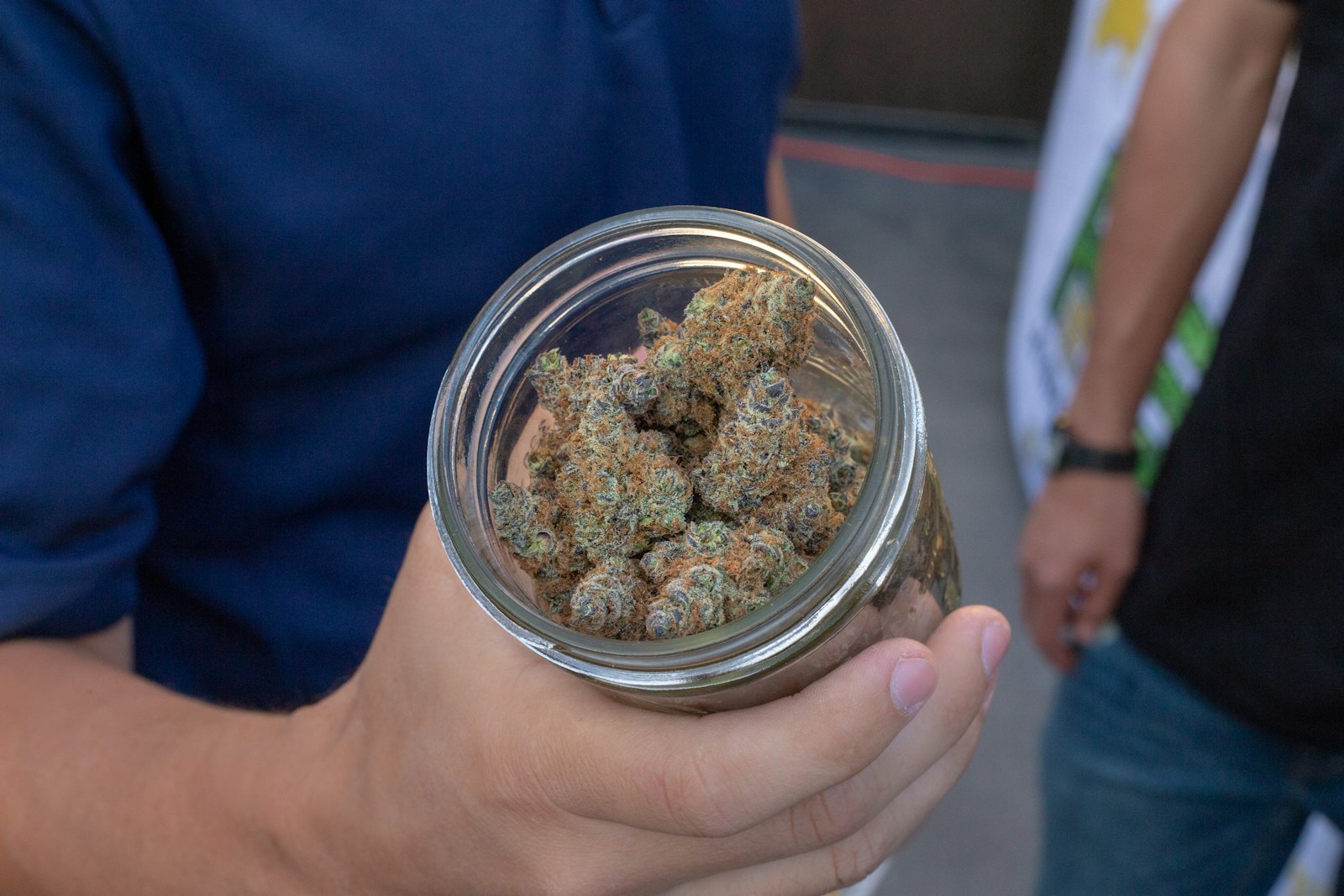
Many Canadian municipalities will accept empty rigid plastic cannabis containers in the blue bin — the round child-resistant jars and bottles that hold dried flower. These tend to be made from materials that standard recycling programs can process, particularly if they’re emptied and rinsed. The operative word is empty: residue and product contamination are the most common reasons recyclable items get rejected at sorting facilities.
Pre-roll tubes are a similar story. Many are made from polypropylene or similar plastics that some municipal programs accept, though acceptance varies. If the packaging has a resin identification code stamped on it, that number tells you which plastic it’s made from and can help you confirm whether your local program accepts it.
What typically cannot go in the blue bin: multi-layer foil bags, packaging with multiple materials bonded together, and most flexible plastic pouches. These are the packaging types that cause problems at sorting facilities because they can’t be separated into single material streams for processing. They need a different route.

Vape Cartridges and Batteries: A Special Category
Vape cartridges and disposable vape pens are not standard recyclables and should not go in any household recycling bin. They contain lithium batteries, residual cannabis oil, and electronic components that collectively qualify them as special or hazardous waste in most Canadian municipalities.
Most municipal e-waste programs will accept disposable vapes alongside other small electronics. Call2Recycle operates drop-off locations across Canada for battery recycling and accepts many vape-style batteries. Some licensed cannabis retailers also collect vape packaging through in-store programs.
The main thing to know: don’t put vape cartridges in the blue bin, and don’t throw lithium batteries in the regular garbage. The battery component is what makes disposal more involved, and it’s worth the small additional effort to route them correctly.
In-Store Take-Back Programs
The most reliable option for cannabis packaging that can’t go in the blue bin is a retailer take-back program. Several have been established across Canada specifically because municipal recycling wasn’t built for this material.
TerraCycle has been one of the primary processors behind cannabis packaging recycling programs in Canada. Their process accepts complex plastic cannabis containers, cleans them, and converts them into recycled plastic pellets for manufacturing new products. Containers collected through retail take-back programs end up processed rather than landfilled.
High Tide’s Canna Cabana stores run a free in-store recycling program that accepts all Health Canada-approved cannabis packaging regardless of brand — outer and inner plastic packaging, tins, joint tubes, plastic bottles, caps, and flexible bags. The identifying marker is the Health Canada THC symbol: if it’s on the packaging, it can be dropped off.
Individual consumers can also mail cannabis packaging directly to TerraCycle for processing in some cases. Check TerraCycle’s current program listings for cannabis packaging to confirm what’s currently accepted and whether mail-in is available.
The Ontario Cannabis Store has also formally recommended that Health Canada reconsider cannabis packaging rules to create a more sustainable environmental footprint for the industry, signalling that regulatory reform is on the long-term agenda even if it hasn’t happened yet.
A Practical Guide to What Goes Where
Rigid plastic jars and bottles (dried flower containers): Check your municipal blue bin guidelines. Many programs accept these if empty and clean.
Pre-roll tubes: Check locally. Many are made from polypropylene and may be accepted by your municipal program if cleaned and empty.
Child-resistant mylar and foil bags: Do not put in blue bin. Route through a retailer take-back program or TerraCycle if accessible.
Multi-layer flexible pouches: Same as foil bags. Not accepted in most blue bin programs. Retailer take-back or TerraCycle is the correct route.
Cardboard outer packaging: Yes, blue bin. Cannabis packaging cardboard is subject to the same recycling rules as any other cardboard — remove any plastic inserts first.
Tins and metal containers: Many municipal programs accept clean metal tins. Check locally.
Vape cartridges and disposable pens: Do not put in blue bin. E-waste drop-off, Call2Recycle locations, or retailer take-back programs.
Accessories packaging: Standard household recycling rules apply depending on the material — cardboard, clean plastic, and metals generally go in the appropriate bins.
A Few Habits Worth Building
Clean before recycling. Any residual cannabis product left in a container is technically a contaminant from the recycling facility’s perspective, and contaminated loads often end up in landfill regardless of the material. A quick rinse of a plastic jar takes ten seconds and significantly increases the likelihood that it actually gets recycled.
Check the resin code. The small triangle with a number stamped on the bottom of most plastic containers tells you what type of plastic it’s made from. Numbers 1 and 2 are accepted by most Canadian municipal programs. Numbers 3 through 7 vary by location and often need a specialized route.
Ask at the counter. Licensed cannabis retailers in Canada are increasingly aware of this issue, and many have either started take-back programs or can point you toward what options exist locally. If your retailer doesn’t have a program, asking is a low-friction way to signal that customers want one.
Batch it up. Rather than dealing with individual containers one at a time, keep a small bag or box for empty cannabis packaging and route it all at once — either to the blue bin for what qualifies, or to a drop-off location for what doesn’t. One trip handles a month’s worth of packaging in a few minutes.

The Bigger Picture
Cannabis packaging waste is a genuine industry-level problem, and it’s one the regulatory framework created. Licensed producers have started exploring more sustainable materials — at least one Nova Scotia producer uses reclaimed ocean plastic in its packaging — but the regulatory constraints around child-resistance and tamper-evidence limit how much individual producers can change without federal policy shifting alongside them.
Consumer behaviour at the end of the packaging lifecycle is only one part of the solution. The more consequential changes involve Health Canada reconsidering how packaging requirements are written so that sustainability gets weighed alongside child safety, and producers designing packaging that meets both standards rather than treating them as incompatible.
In the meantime, the recycling programs that do exist — retailer take-backs, TerraCycle, and municipal blue bin acceptance for qualifying materials — are the most accessible routes available. Using them consistently is both the practical right answer and a signal to retailers and producers that their customers are paying attention to this.
Frequently Asked Questions
Can I put cannabis containers in my blue bin?
It depends on your municipality and the specific container. Rigid plastic jars and bottles are accepted by many municipal programs when empty and clean. Foil bags, multi-layer flexible pouches, and vape products are generally not accepted in blue bins and need a different route.
Where can I drop off cannabis packaging for recycling?
Retailer take-back programs are the most accessible option. Canna Cabana stores run a free program accepting all Health Canada-stamped packaging. TerraCycle also processes cannabis packaging through retail collection points and in some cases mail-in. Check what’s available in your area.
Can I recycle a vape pen or cartridge?
Not in the blue bin. Vape products contain lithium batteries and residual cannabis oil that qualify them as special or hazardous waste. Route them through e-waste drop-offs, Call2Recycle locations, or retailer take-back programs that specifically accept vape products.
Why is cannabis packaging so hard to recycle?
Because Health Canada’s packaging regulations prioritize child safety and tamper-evidence over sustainability, and the multi-material construction required to meet those standards can’t be processed by most standard municipal recycling programs. The regulations weren’t written with recyclability in mind, and the industry has been working around that reality since 2018.
Can cannabis containers be reused?
Health Canada regulations prohibit consumers from reusing cannabis containers. The regulation exists for safety and contamination prevention reasons, but it does close off one of the most obvious waste-reduction options.
The Bottom Line
Cannabis packaging in Canada is a regulatory problem as much as a consumer behaviour problem, but there are real options available right now for responsible disposal. Clean rigid plastic jars and cardboard can often go in the blue bin. Foil bags, flexible pouches, and complex multi-material packaging need a retailer take-back program or TerraCycle. Vape products need e-waste handling. Asking at the counter, checking your municipality’s accepted materials list, and using the in-store programs that exist are the three habits that make the biggest practical difference. Every container routed away from landfill is worth the extra step.
Shop related at The Purple Leaf: cannabis flower · edibles
Buy weed online in Canada · Same-day weed delivery in London, Ontario on weekday orders placed before noon (12:00 PM EST).