

Cannabis edibles are one of the most popular formats in Canada’s legal market, and it’s easy to see why. No smoke, no vapour, no accessories — just a familiar product with clearly labelled THC content that you eat and wait for. But that familiarity can work against you if you don’t understand how edibles actually behave in the body. This guide covers every format, what to look for on the label, how to approach dosing for the first time, and how to store what you buy properly.
What Makes Something a Cannabis Edible?
Any cannabis product designed to be consumed orally falls into this category. In Canada’s legal market, that spans gummies, chocolates, baked goods, mints, and other food-format products, all produced by federally licensed cannabis companies and sold through licensed retailers like The Purple Leaf.
Every legal cannabis edible in Canada is capped at 10mg of THC per package under the Cannabis Act. That single regulation is one of the most consumer-friendly aspects of Canada’s legal edibles market — it creates a standardized ceiling that makes dosing predictable and comparable across every product on the shelf, regardless of brand or format.
Gummies: The Most Popular Edible Format
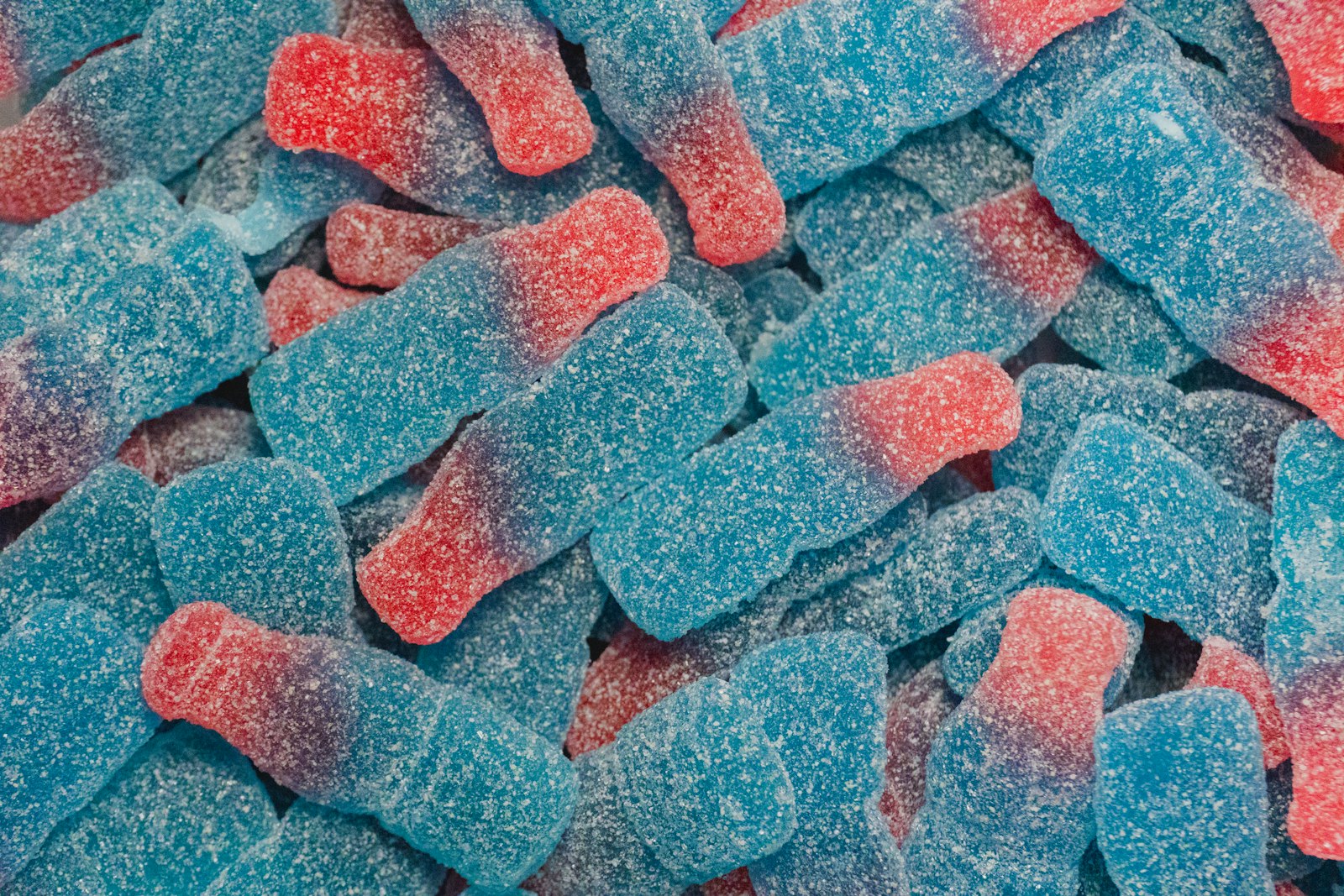
Gummies have become the dominant edible format in Canada for good reason. They’re pre-portioned, shelf-stable, easy to store, and available in enough flavour variety that most people can find something genuinely appealing. Each piece contains a defined amount of THC, which makes tracking exactly how much you’ve consumed straightforward in a way that some other formats aren’t.
The individually dosed nature of gummies also makes them the most practical format for starting conservatively. If a pack contains five pieces at 2mg of THC each, you know precisely what one piece delivers before you eat it. That transparency is one of the format’s defining advantages, particularly for newer consumers who are still learning how edibles affect them personally.
Gummies come in an increasingly diverse range of formulations. THC-only products sit at one end of the spectrum. Balanced 1:1 THC to CBD products sit at the other, producing a more settled, less intensely psychoactive experience that many consumers prefer for daytime or lower-key use. Full-spectrum gummies, which preserve a broader cannabinoid and terpene profile from the source cannabis, are also widely available and are often described as producing a more rounded experience than distillate-based products at the same milligram count. The Purple Leaf’s edibles selection spans all three of these formulation types.
Chocolates: A Richer Alternative
Cannabis-infused chocolates work on the same dosing principles as gummies, typically divided into individual squares or pieces with a defined THC amount per piece. The appeal is straightforward: for consumers who prefer the flavour profile of chocolate over fruity gummy flavours, it’s an equally precise and convenient format.
What distinguishes chocolate from gummies beyond flavour is the fat content. Cocoa butter and dairy fat create a natural binding matrix for cannabis extract, which is why chocolate and cannabis integrate particularly well. Cannabinoids are fat-soluble, meaning they bind to and distribute through fat during manufacturing in a way that produces consistent dosing throughout a well-made cannabis chocolate.
Full-spectrum extracts in particular interact well with a high-fat chocolate base. The aromatic terpene compounds in full-spectrum extracts blend into a rich dark chocolate in a way that adds genuine complexity rather than simply adding a cannabis flavour on top. For consumers who care about the quality of what they’re eating alongside the THC content, a well-made cannabis chocolate is genuinely enjoyable as a food product rather than just a delivery mechanism.
Chocolate is more sensitive to storage conditions than gummies. Heat causes it to melt or bloom, and temperature swings affect both texture and the distribution of the cannabis extract within the bar. Keeping chocolate edibles cool and away from heat sources is important for both food quality and consistent dosing.
Baked Goods and Pantry Items: The Most Variable Format
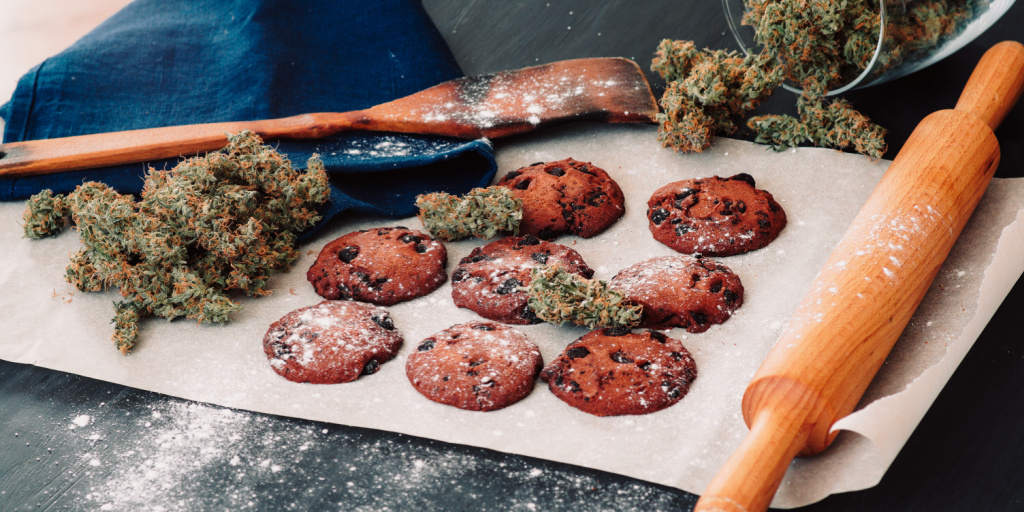
The baked goods category covers everything from infused cookies and brownies to other pantry-style cannabis food products. It’s the most varied part of the edibles shelf and also the one that requires the most attention to packaging before you buy.
Where a gummy or chocolate square is typically divided into clearly defined individual pieces with a stated THC amount per piece, baked goods can vary in how their total THC content is distributed. The label is your most important tool here: check whether the product states a per-serving THC amount or only a total package amount, and factor that information into how you approach consumption.
Baked goods also have a shorter shelf life than gummies or chocolate. The best-before date matters more with this format than with any other edible, so checking it before you buy and consuming within a reasonable timeframe after opening is worth building into your habits.

How Edibles Work in Your Body
This is the most important thing to understand about edibles, and it’s the piece that catches most first-timers off guard.
When you smoke or vape cannabis, THC travels directly from your lungs into your bloodstream. Onset happens within minutes and you can read your experience in real time. Edibles take an entirely different route. THC passes through your digestive system and is processed by the liver before entering circulation, which takes considerably longer — typically 30 to 90 minutes, though the range can extend further depending on your metabolism, body composition, and what you’ve eaten.
During that liver processing, THC is converted into 11-hydroxy-THC, a metabolite that crosses the blood-brain barrier more efficiently than inhaled THC and produces an experience that many people describe as more intense and longer-lasting. This is why a 5mg edible and a 5mg inhaled dose can feel meaningfully different from each other even at the same milligram count.
Once edibles arrive, effects typically last four to eight hours, compared to the one to three hour window most people experience with inhaled cannabis. The duration is worth planning around before you consume.
Reading an Edibles Label
Every legal cannabis edible in Canada carries standardized labelling requirements. Knowing what to look for makes comparing products straightforward.
Total THC per package tells you the overall cannabinoid content of the product. The legal maximum is 10mg per package.
THC per piece or serving is the more practically useful number for day-to-day decisions. This tells you exactly how much THC you’re consuming in a single gummy, square, or serving, which is the figure that matters most for pacing yourself.
Total CBD reflects the CBD content if the product uses a balanced or CBD-forward formulation. A meaningful CBD presence alongside THC is associated with a more settled, less intensely psychoactive experience.
Extract type tells you whether the product uses full-spectrum, broad-spectrum, or isolate-based cannabis extract. This shapes the character of the experience beyond just the THC milligram count.
Ingredients and allergen information are required on every edible label just like any other food product. Worth checking if you have dietary restrictions or sensitivities.
Packaged-on and best-before dates indicate freshness and shelf life. More relevant for baked goods than gummies, but worth noting for all formats.
The standardized cannabis symbol confirms the product is legal and produced by a licensed Canadian cannabis company.
How to Approach Dosing for the First Time
Start lower than you think you need to and give it more time than feels necessary. These two pieces of advice solve most of the difficult experiences people have with edibles.
For a first experience, 2.5mg to 5mg is a sensible starting point for most people. Give it a full 90 minutes to two hours before deciding whether you want more. What you feel at the 45-minute mark is not where you’ll be at two hours — the experience is still building, and that building is the part most first-timers don’t account for.
The most common edible mistake is taking more because nothing seems to be happening, then having both doses arrive at once. Canada’s legal edibles market makes this mistake easier to avoid than it’s ever been, because the per-piece THC amount is clearly stated on every product. Use that number to make a deliberate choice before you eat anything, not after.
For experienced cannabis consumers comfortable with edibles, 10mg is a common and manageable starting point. For consumers returning to cannabis after a long break, treating yourself as a beginner regardless of prior experience is the approach most likely to result in a comfortable first session.
Storing Edibles Properly
Cannabis edibles are food products and deserve the same storage consideration as anything else you eat.
Keep them in their original child-resistant packaging whenever possible. Store away from children and pets, and never where they could be mistaken for regular snacks. The packaging on every legal cannabis edible in Canada is required to be child-resistant and clearly labelled, which helps prevent accidental consumption.
Check best-before dates, particularly on baked goods. Gummies and chocolates have longer shelf lives, but baked goods deteriorate in both food quality and cannabinoid integrity over time.
Heat is the main storage enemy for chocolate specifically. A warm countertop, a sunny windowsill, or a hot car will melt or bloom the chocolate and can affect the distribution of cannabis extract throughout the product. Keep chocolate edibles cool and away from temperature extremes.
For all formats, a cool, dark spot away from direct light and heat maintains both the food quality and the cannabinoid profile for as long as possible.
Choosing the Right Edible for You
The right edible format comes down to what you actually want to eat and how precisely you want to manage your dose.
Gummies offer the clearest per-piece dosing and the most flavour variety. They’re the most forgiving format for starting conservatively and the easiest to portion incrementally. For most first-time edible consumers, a low-dose gummy is the natural starting point.
Chocolates suit consumers who prefer a richer flavour profile and don’t mind being slightly more attentive to storage conditions. The fat content of chocolate can affect absorption, and high-fat meals around the time of consumption may intensify or accelerate the experience.
Baked goods suit consumers who want something closer to a conventional food experience, but reward more careful label reading before purchase to understand how the total THC is distributed across the product.
Whatever format you choose, the same foundational advice applies: start with a small amount, check the per-serving THC content on the label before you eat, and give it the full time it needs before reassessing. The Purple Leaf carries cannabis edibles across all three formats with clearly labelled cannabinoid content to make that process as straightforward as possible.
Common Questions About Cannabis Edibles
Why do edibles take so long to kick in?
Because they’re processed through your digestive system and liver before THC enters your bloodstream, unlike inhaled cannabis which travels directly from your lungs. That digestive pathway is what creates the 30 to 90-minute onset window, and it’s also why the effects last significantly longer once they arrive.
Is a 5mg gummy strong?
For someone new to cannabis edibles, 5mg is a noticeable and real experience — not overwhelming for most people at this level, but genuinely felt. For regular cannabis consumers, 5mg may register as a mild starting point. Individual response varies significantly based on tolerance, metabolism, and body composition.
What’s the difference between a THC gummy and a CBD gummy?
A THC gummy produces a psychoactive effect. A CBD gummy does not. Balanced 1:1 products containing both THC and CBD produce a modified experience — the CBD moderates some of the more intensely psychoactive qualities of the THC, which many consumers find results in a more settled, comfortable experience than a THC-only product at the same milligram count.
Can I eat half a gummy to get a lower dose?
Yes, though the consistency of THC distribution across any edible product can vary slightly, even in well-manufactured products. Cutting a gummy in half gives you a reasonable approximation of half the dose rather than a mathematically precise one. Starting with a product that contains individually smaller pieces is a more reliable way to manage low doses if precision matters to you.
How should I store gummies after opening?
In their original child-resistant packaging, resealed tightly, in a cool dark spot away from heat and direct sunlight. Humidity can affect gummy texture over time. An airtight container is a good secondary option if the original packaging doesn’t reseal well after opening.
What if I took too much?
Find a comfortable, familiar space, drink water, and remind yourself the effects are temporary and will pass. Avoid alcohol and caffeine. A light snack may help slow further absorption if the edible is still building. The effects will resolve on their own. If you want guidance on lower-dose options for next time, the team at The Purple Leaf can help you find a better starting point.
The Bottom Line
Cannabis edibles are one of the most accessible and enjoyable formats in Canada’s legal market when approached with the right expectations. Know your per-serving THC amount before you eat. Give it the full time it needs to arrive. Start lower than you think you need to and work up from a comfortable baseline. The regulated labelling on every product sold through a licensed retailer gives you all the information you need to make a genuinely informed choice. Visit The Purple Leaf to explore our edibles selection and find the right format and dose for your first or next experience.
For use by adults of legal age only. This article is for informational purposes only and is not medical advice.
Shop related at The Purple Leaf: edibles · gummies & candy · cannabis chocolate
Shop THC gummies online in Canada · Same-day weed delivery in London, Ontario on weekday orders placed before noon (12:00 PM EST).