

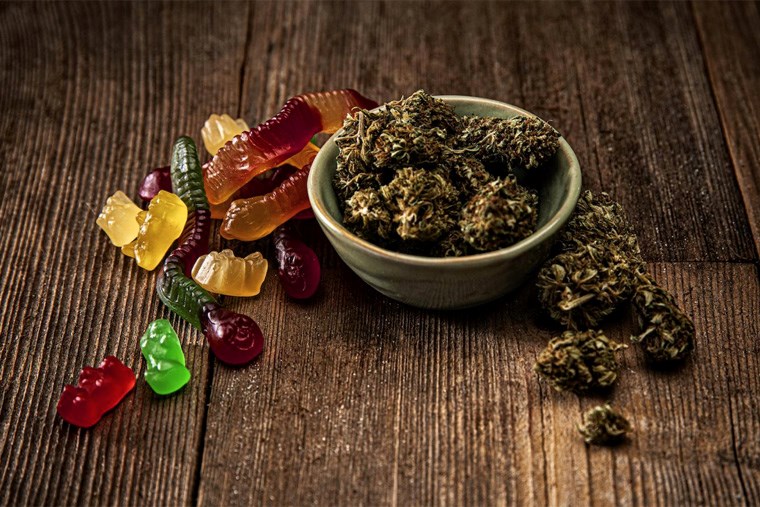
Cannabis gummies are one of the most consistently popular products on the edibles shelf, and for good reason. They’re familiar, easy to portion, clearly labelled, and available in enough flavour and formulation variety to suit nearly any preference. But most cannabis consumers, even experienced ones, don’t know much about what actually goes into making them. Understanding the production process behind a legal cannabis gummy changes how you read a label — and helps you make more informed decisions every time you shop. Here’s the complete picture, from cannabis extract to the finished, sugar-coated piece sitting in the package.
Why Canada’s Regulatory Framework Matters Here
Before getting into the production side, it’s worth understanding the context that shapes how every cannabis gummy in Canada is made.
Cannabis edibles became legal in Canada in October 2019 when the federal government extended legalization under the Cannabis Act to include edibles, extracts, and topicals. Health Canada regulates every stage of production — from how cannabis is grown and extracted to how edibles are manufactured, tested, packaged, and labelled. Every cannabis gummy sold through a licensed retailer like The Purple Leaf has passed through a standardized production and testing process before it reaches the shelf.
That’s what makes legal cannabis edibles in Canada meaningfully different from anything made outside the regulated system. The label tells you what’s in the product, how much of each cannabinoid is present, and that it’s been tested for potency accuracy and contaminants before it was sold. The 10mg THC cap per serving that applies across all legal cannabis edibles in Canada is part of this same framework, designed to give consumers a standardized reference point for making informed, measured dosing decisions.
Step One: Cannabis Extract
Every cannabis gummy starts with a cannabis extract. Raw flower doesn’t go into a gummy — the cannabinoids need to be extracted from plant material first and converted into a form that can be accurately measured and evenly distributed through a food base.
Two extraction methods are most commonly used in licensed Canadian cannabis production.
CO₂ extraction uses pressurized carbon dioxide to pull cannabinoids and terpenes from plant material. It’s a clean process that doesn’t require harsh solvents and can be calibrated to preserve specific compounds. Many premium producers favour CO₂ extraction because it produces a consistent, high-quality extract without residual chemical contamination.
Ethanol extraction uses pharmaceutical-grade alcohol to dissolve cannabinoids from the plant material. The ethanol is then evaporated, leaving behind a concentrated cannabis extract. It’s efficient, scalable, and widely used across Canada’s legal market.
The extract produced by either method is highly concentrated. Before it can go into a gummy, it needs one more step.
Step Two: Decarboxylation
Raw cannabis extract contains THCA — the acidic precursor to THC — rather than active THC itself. THCA doesn’t produce psychoactive effects on its own. It needs to be converted to THC through a process called decarboxylation, which involves applying controlled heat over a specific period.
In licensed cannabis production facilities, this happens in precise industrial equipment that maintains exact temperatures and timing, ensuring consistent and accurate activation of cannabinoids across every batch. This is one of the reasons professional cannabis gummy production is more reliable than homemade edibles. The consistency of the decarboxylation step directly affects the potency accuracy of the finished product. An under-processed extract means the final gummy has less active THC than the label indicates. Over-processing degrades terpenes and can affect flavour.
Step Three: Building the Gummy Base
Once the extract is prepared, it gets incorporated into the gummy base. Traditional gummies use gelatin — an animal-derived gelling agent — which gives them their chewy, elastic texture. Many producers now use pectin, a plant-derived alternative that produces a slightly firmer gummy and makes the product suitable for vegan consumers. The choice of base affects texture and mouthfeel without impacting cannabinoid content or potency.
The gummy base starts as a heated liquid mixture of the gelling agent, sweeteners, water, and flavouring. This is where natural flavours enter the picture. Natural flavouring refers to compounds derived from natural sources — fruits, vegetables, herbs, or other plant materials — rather than synthesized alternatives. The specific combination of flavouring compounds is what distinguishes a tropical gummy from a sour berry one, and it’s what makes well-formulated cannabis gummies taste genuinely good rather than medicinal.
Cannabis extract is added to this liquid mixture at this stage, while it’s still heated and fluid enough to allow even distribution. Getting that distribution right is the core technical challenge of gummy production — and it’s why the next step exists. Browse The Purple Leaf’s edibles selection to explore gummies across different flavour and cannabinoid profiles.
Step Four: Infusion and Homogenization
Even distribution of cannabis extract through a gummy batch isn’t achieved by stirring alone. Licensed cannabis producers use industrial homogenization equipment to ensure the extract is uniformly distributed through the liquid base before the mixture sets into individual pieces.
Homogenization is what makes a legal cannabis gummy reliable. When you eat one gummy from a pack and another from the same pack, both should contain the same amount of THC, CBD, and any other cannabinoids listed on the label. That consistency is a production requirement, not an assumption, and achieving it requires equipment and processes that aren’t available in a home kitchen.
The infused, homogenized mixture is then deposited into moulds via automated equipment, where it sets at controlled temperatures. The shape and size of the finished gummy are determined at this stage.
Step Five: Finishing and Coating
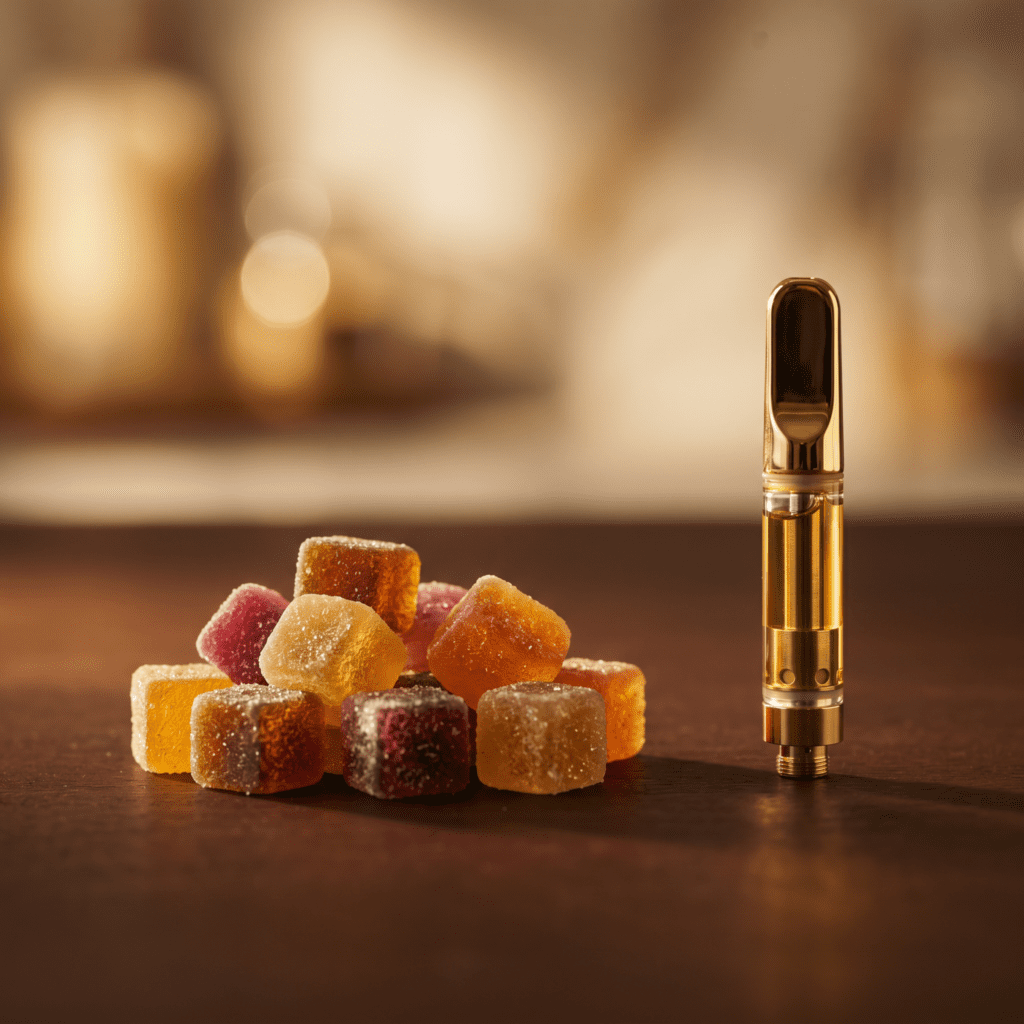
Once the gummy base has set and the pieces have been released from their moulds, many cannabis gummies go through a finishing step. Sugar coating is one of the most common approaches — the finished pieces are tumbled in fine sugar to create a lightly sweet, slightly crystalline exterior. This serves two functions: it adds a tactile contrast to the chewy interior, and it contributes an additional layer of sweetness that can balance tart or acidic flavour profiles. For fruit-forward gummies, the sugar coating rounds out the overall flavour in a way that makes the eating experience more enjoyable.
Other producers use a light citric acid dusting for sour gummies, or skip the coating entirely for a simpler, cleaner product. The finishing step is visible and affects flavour, but doesn’t change the cannabinoid content.
After coating, the finished gummies are inspected and packaged in child-resistant, Health Canada-compliant packaging before being distributed to licensed retailers.

How Health Canada Regulates the Finished Product
Every cannabis gummy sold in Canada’s legal market must meet Health Canada’s requirements under the Cannabis Act before it reaches the shelf. This isn’t a voluntary standard — it’s a legal requirement that applies to every licensed producer without exception.
Testing requirements mandate that producers test finished edible products for cannabinoid content accuracy. The milligrams of THC and CBD on the label must match what’s actually in the product within a permitted variance range. Products that fall outside that range cannot be sold.
Packaging requirements specify that cannabis edibles must come in plain, child-resistant packaging without imagery or design elements that could appeal to young people. Every package must carry the standardized cannabis symbol, the THC and CBD content in milligrams, a full ingredient list, nutritional information, the packaged-on date, and the excise stamp confirming the product was made by a federally licensed producer.
The 10mg THC limit per package applies to every edible format in the Canadian market without exception. This single regulation shapes the dose of every legal cannabis gummy in Canada and is the reason you can read the label, know exactly what’s in each piece, and make an informed purchase before you open the bag.
What the Label Is Actually Telling You
Understanding how a gummy is made helps you read its label with more context. The THC and CBD milligram figures reflect what came out of the extraction, decarboxylation, and homogenization process — the result of a regulated production chain, not an estimate. The ingredient list tells you whether the base is gelatin or pectin, which matters if you’re vegan or have dietary considerations. The packaged-on date tells you about freshness, which affects terpene quality if the extract is full-spectrum. The extract type — full-spectrum, broad-spectrum, or isolate-based — tells you whether the product carries the broader cannabinoid and terpene profile of the plant or has been refined down to one or two specific compounds.
A full-spectrum gummy at 5mg THC and a distillate-based isolate gummy at 5mg THC may feel different from each other because the former carries minor cannabinoids and terpenes that interact with the THC in ways that shape the overall experience. Neither is inherently better — knowing which you’re buying helps you set accurate expectations. The Purple Leaf’s edibles selection spans different extract types and cannabinoid combinations, all clearly labelled so you can compare before you decide.
Common Questions About Cannabis Gummy Production
Are legal cannabis gummies more consistent than homemade edibles?
Yes, significantly. The homogenization step in licensed production ensures even cannabinoid distribution throughout every batch. Homemade edibles lack the equipment to achieve this, which means cannabinoid content can vary considerably between individual pieces even within the same batch. Legal gummies sold through licensed retailers like The Purple Leaf are tested for potency accuracy before they reach the shelf — homemade ones are not.
What’s the difference between a gelatin and a pectin gummy?
Gelatin produces a softer, more elastic chew. Pectin produces a slightly firmer texture and makes the gummy suitable for vegan consumers. Both are common in Canada’s legal cannabis gummy market. The base type is usually listed in the ingredients on the package.
What does “natural flavour” mean on a cannabis gummy label?
Natural flavour refers to flavouring compounds derived from natural sources — fruits, vegetables, herbs, or spices — rather than from chemically synthesized alternatives. It’s what gives a specific gummy its distinct flavour character, and it’s required to be listed in the ingredients under Health Canada’s labelling requirements.
Why is there a 10mg THC limit per package?
The limit is set by Health Canada under the Cannabis Act to give consumers a standardized, clearly measurable serving size as a reference point for dosing decisions. It applies to every edible format in Canada — gummies, chocolates, beverages, and baked goods — without exception. For consumers who want to start low, this cap makes it straightforward to find products at 2.5mg or 5mg per piece rather than having to portion down a higher-dose product yourself.
Does the extract type affect how the gummy feels?
It can. Full-spectrum extracts retain a broader range of cannabinoids and terpenes from the cannabis plant, and many consumers report that the resulting experience feels more layered and complete than an isolate-based product at the same THC dose. Distillate-based gummies tend to produce a more neutral, consistent result without the variation that comes from terpene character. Both are common in Canada’s legal market and clearly indicated in the product’s extract type label.
How do I know the THC content listed is accurate?
Because licensed producers in Canada are required by Health Canada to test their finished edible products before they can be sold. The milligrams of THC and CBD on the label must match the actual content of the finished product within a permitted variance range. This testing requirement is enforced, not voluntary, and it’s one of the most meaningful reasons buying from a licensed retailer provides genuine consumer protection that buying from any other source cannot.
The Bottom Line
A cannabis gummy that looks simple on the shelf is the result of a regulated, multi-step production process — extraction, decarboxylation, infusion, homogenization, finishing, testing, and packaging — all governed by Health Canada’s requirements before it reaches you. Knowing what went into making it gives you a clearer lens for reading the label, comparing products, and making choices that genuinely align with what you’re looking for. Visit The Purple Leaf to explore our full edibles selection and find the right gummy for your preferences and dose.
Shop related at The Purple Leaf: gummies & candy · edibles
Shop THC gummies online in Canada · Same-day weed delivery in London, Ontario on weekday orders placed before noon (12:00 PM EST).