

Quick answer: Delta-9 THC is the main intoxicating compound in cannabis. Other forms include THCA (the raw acid form that converts to delta-9 when heated), delta-8 and delta-10, THCV and THCP. Research on the newer cannabinoids is limited and their legal status varies, so check before you buy.
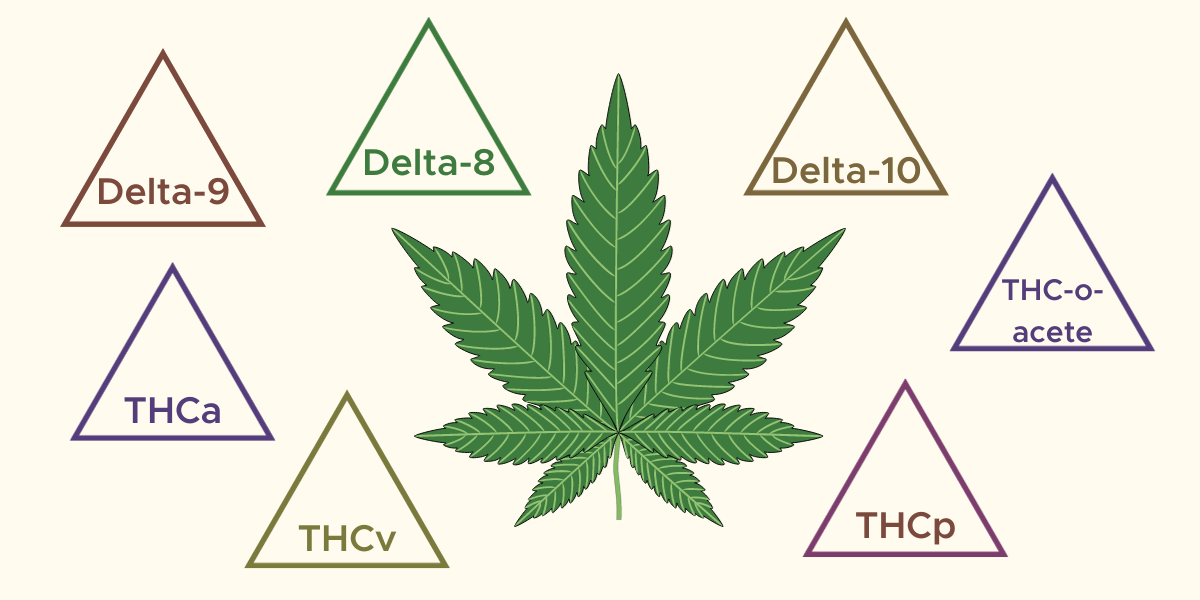
THC is often treated as a single compound, but cannabis contains several forms and variants of tetrahydrocannabinol. From traditional Delta-9 THC to newer cannabinoids such as Delta-8, Delta-10, THCA, THCV and THCP, each compound has a different chemical structure, level of research and legal status.
Understanding the differences between the major types of THC can help readers better understand the rapidly evolving cannabis industry. However, research into many newer cannabinoids remains limited, and laws can vary significantly depending on location.
The 6 Main Types of THC
1. Delta-9 THC
The most well-known and extensively researched form of THC. Delta-9 THC is primarily responsible for the intoxicating effects traditionally associated with cannabis.
Key characteristics:
- Most researched THC compound
- Primary intoxicating cannabinoid in cannabis
- Effects can vary depending on concentration and individual factors
- Higher concentrations are associated with greater impairment and health risks
2. Delta-8 THC
Delta-8 THC is chemically similar to Delta-9 THC but occurs naturally in cannabis in much smaller quantities. It has gained popularity in recent years, although scientific research into its effects remains comparatively limited.
Key characteristics:
- Structurally similar to Delta-9 THC
- Naturally present in smaller amounts
- Limited research compared with Delta-9
- Legal status varies by jurisdiction
3. Delta-10 THC
Delta-10 THC is another THC isomer that has emerged in the cannabinoid marketplace. Compared with Delta-8 and Delta-9, significantly less scientific research is available regarding its effects and safety profile.
Key characteristics:
- Less researched than Delta-8 and Delta-9
- Naturally occurs in very small quantities
- Often discussed alongside other novel cannabinoids
- Regulatory treatment varies widely
4. THCA
Tetrahydrocannabinolic acid, or THCA, is a naturally occurring cannabinoid found in raw cannabis. Unlike Delta-9 THC, THCA itself is generally not considered intoxicating in its raw form. When exposed to sufficient heat, it can undergo decarboxylation and convert into Delta-9 THC.
Key characteristics:
- Found naturally in raw cannabis
- Precursor to Delta-9 THC
- Chemical composition changes when heated
- Has become important in discussions surrounding cannabis regulation
5. THCV
Tetrahydrocannabivarin, or THCV, differs structurally from traditional THC compounds. Research into THCV is still developing, and its effects may differ depending on dosage and other biological factors.
Key characteristics:
- Distinct chemical structure
- Present in smaller quantities in many cannabis varieties
- Research remains limited
- May interact differently with cannabinoid receptors than Delta-9 THC
6. THCP
Tetrahydrocannabiphorol, or THCP, is one of the newer cannabinoids identified by researchers. It has attracted attention because laboratory research suggests it may interact strongly with cannabinoid receptors, although human research remains limited.
Key characteristics:
- Relatively newly identified cannabinoid
- Limited human research available
- Potency claims should be interpreted carefully
- Long-term effects remain poorly understood

THC Potency Comparison
| Type | Research Level | Relative Potency Understanding | Intoxicating Potential |
|---|---|---|---|
| Delta-9 THC | Extensive | Established reference point | High |
| Delta-8 THC | Limited | Generally considered different from Delta-9 | Yes |
| Delta-10 THC | Very limited | Not well established | Potentially |
| THCA | Growing | Non-intoxicating before conversion | Depends on chemical conversion |
| THCV | Limited | Effects differ from traditional THC | Can vary |
| THCP | Very limited | Requires more human research | Potentially significant |
Important: Potency comparisons between cannabinoids are often oversimplified. Laboratory receptor activity does not necessarily translate directly into predictable effects in humans. Individual biology, product composition and cannabinoid interactions can all influence outcomes.
Effects of Different Types of THC
Different THC compounds can interact with the body’s endocannabinoid system in different ways. Delta-9 THC remains the most extensively studied, while many alternative cannabinoids have substantially less clinical research supporting claims about their effects.
Health Canada notes that THC can impair cognitive and psychomotor function, and risks may increase with higher-potency cannabis products. Novel intoxicating cannabinoids are generally less understood, meaning their safety profiles are still being established.
Are All Types of THC Legal?
The legal status of THC is complicated and depends heavily on where you live.
In Canada, cannabis is regulated federally, while rules surrounding production, sale and possession are governed through the Cannabis Act and provincial systems. Other jurisdictions, particularly the United States, may have different rules for Delta-9 THC, hemp-derived cannabinoids, THCA and newer semi-synthetic compounds.
The legality of a cannabinoid can depend on:
- Its source
- Its chemical structure
- How it was produced
- Its concentration
- Federal regulations
- Provincial, state or local laws
Because cannabis regulations continue to evolve, readers should always consult current laws in their jurisdiction rather than relying on general online information.
Which Type of THC Is the Strongest?
There is no universally simple answer. Delta-9 THC is the best understood and most extensively researched intoxicating cannabinoid. THCP has generated attention for its receptor-binding characteristics, but claims that assign a precise multiple of Delta-9 THC’s effects can be misleading because human research remains limited.
Potency should also not be confused with safety. Higher concentrations of THC and high-potency cannabis products can increase the likelihood of unwanted effects and impairment.
Frequently Asked Questions
What are the six main types of THC?
The six commonly discussed types are Delta-9 THC, Delta-8 THC, Delta-10 THC, THCA, THCV and THCP.
Is THCA the same as THC?
No. THCA is a precursor compound that can convert into Delta-9 THC through decarboxylation when exposed to sufficient heat.
Is Delta-8 stronger than Delta-9?
The two compounds are chemically similar but are not identical. Their effects and potency can differ, and research into Delta-8 remains more limited than research into Delta-9.
Which THC has been researched the most?
Delta-9 THC is by far the most extensively researched THC compound.
Are newer types of THC safe?
Many newer or alternative cannabinoids have limited long-term human research. Health authorities caution that intoxicating cannabinoids beyond traditional Delta-9 THC are less understood and may carry similar risks.
Conclusion
The world of THC is much more complex than Delta-9 alone. Delta-8, Delta-10, THCA, THCV and THCP each have unique chemical characteristics, research histories and regulatory considerations.
However, Delta-9 THC remains the scientific benchmark against which most other THC compounds are compared. As research and cannabis laws continue to evolve, consumers and businesses alike should be cautious about treating early potency claims or marketing language as established scientific fact.
Shop related at The Purple Leaf: distillate · cannabis flower
Buy weed online in Canada · Same-day weed delivery in London, Ontario on weekday orders placed before noon (12:00 PM EST).