Cannabis edibles typically take 30 minutes to 2 hours to kick in. That is the honest, direct answer — and it is the most important piece of information you can have before consuming an edible for the first time.
Everything else on this page explains why the window is so wide, what factors push your experience toward the faster or slower end of that range, and what to do while you’re waiting. But the number to remember — the one that prevents the overwhelming majority of uncomfortable edibles experiences — is two hours.
Do not take more until two hours have passed.
Why Edibles Take So Long to Work
The delayed onset of cannabis edibles is not a malfunction and it is not an indication that the product isn’t working. It is a direct consequence of how edibles are processed by the body — a pharmacological pathway that is fundamentally different from smoking or vaping.
When you inhale cannabis, THC enters the bloodstream through the lungs and reaches the brain within minutes. The pathway is direct and fast.
When you eat a cannabis edible, THC travels through your digestive system — stomach, small intestine — before being absorbed into the bloodstream. From there it travels to the liver, where it is metabolised into a compound called 11-hydroxy-THC. This metabolite crosses the blood-brain barrier more effectively than inhaled THC and produces effects that are more intense and significantly longer-lasting than smoked or vaped cannabis at the equivalent dose.
The time that process takes — digestion, absorption, liver metabolism — is what produces the delay. It cannot be rushed by drinking more water, eating more food, or taking more edible. It simply takes the time it takes.
What Affects How Long Edibles Take to Kick In?
Within the 30-minute to 2-hour window, several factors consistently influence where your experience falls.
Whether You’ve Eaten Recently
This is the single biggest variable. Consuming an edible on an empty stomach significantly speeds up onset — sometimes to as little as 20–30 minutes — because there is no competing food content in the digestive system to slow the absorption process. The effects can also be noticeably more intense on an empty stomach for the same reason.
Consuming an edible after a large, fatty meal can push onset to the far end of the window — 90 minutes to 2 hours — as the cannabis oil is processed alongside a significant quantity of other food content. The effects at this end of the window tend to be slightly more gradual and potentially less intense at peak.
For a predictable, manageable first edibles experience, eating a light meal 30–60 minutes before consuming is the most practical approach — present enough food to moderate the intensity, not so much that it significantly delays onset.
Your Metabolism
Individual metabolic rate influences how quickly the digestive system processes the edible and how efficiently the liver converts THC to 11-hydroxy-THC. Users with faster metabolisms generally experience faster onset. Users with slower metabolisms experience later onset.
This is one of the reasons two people can eat the same edible at the same time and feel effects at meaningfully different times — not because one product worked and the other didn’t, but because their individual metabolic rates produced different timelines.
The Specific Edible Format
Not all edibles absorb at the same rate. The specific format of the product influences how quickly the cannabis oil reaches the bloodstream.
Tinctures and sublingual strips — products held under the tongue before swallowing — bypass the digestive system partially, absorbing directly through the mucous membranes. This produces noticeably faster onset than fully swallowed products — sometimes as little as 15–30 minutes.
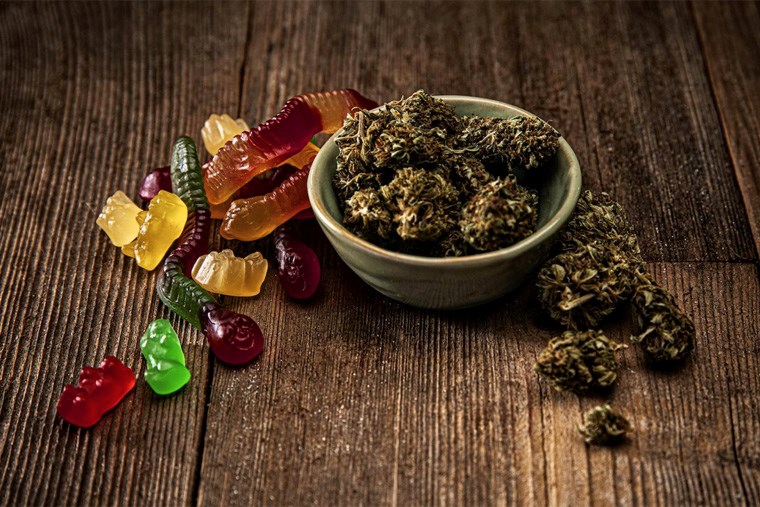
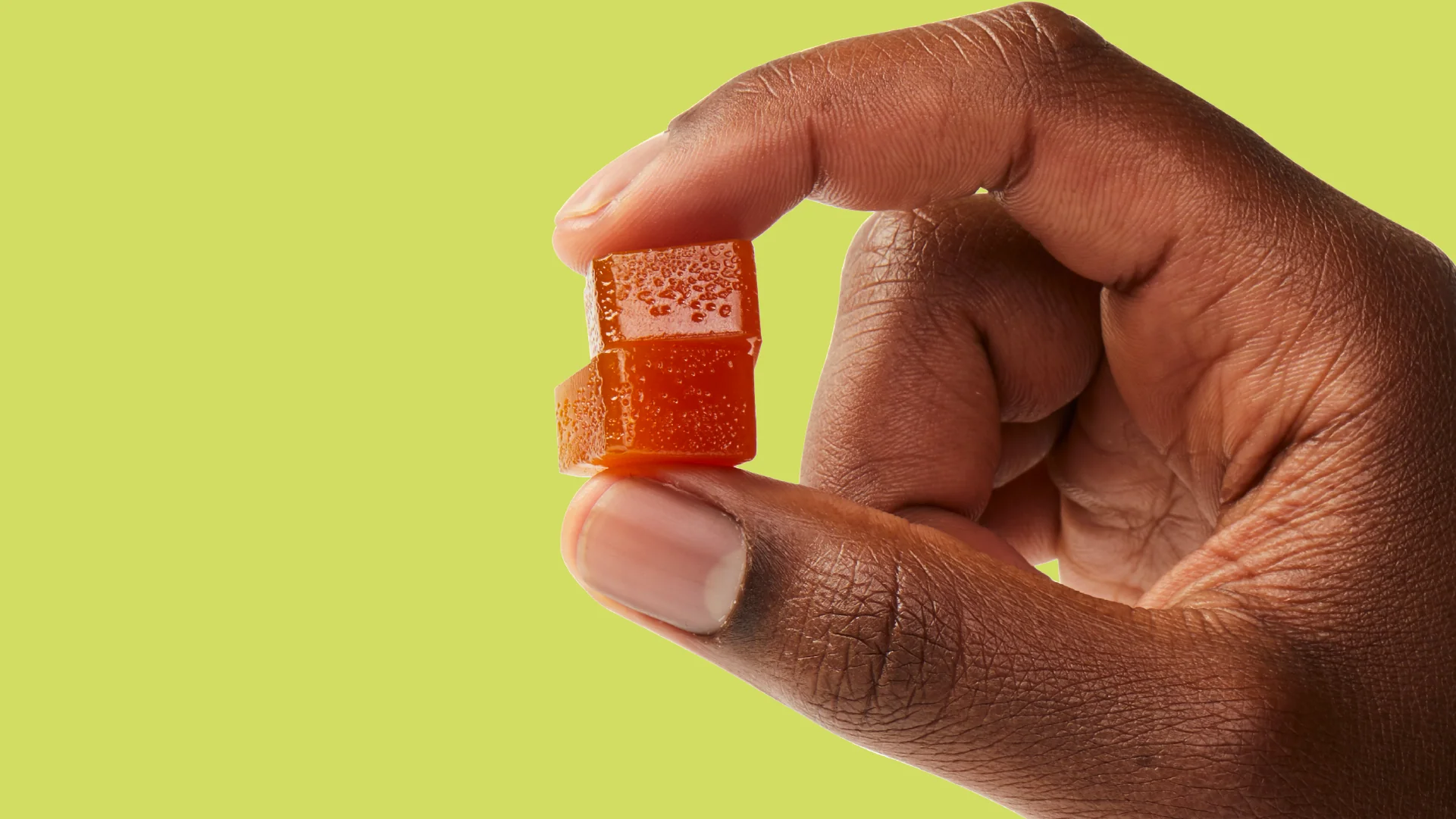
Gummies and soft chews are broken down relatively quickly by the digestive system and tend to onset faster than denser, fat-rich products at the lower end of the window.
Chocolate, baked goods, and fat-rich edibles take longer to digest than simpler formats. The fat content, while it ultimately enhances THC absorption, slows the initial digestive process.
Capsules swallowed whole tend to onset slightly more slowly than gummies or chews, and are often the most consistent and predictable format in terms of both timing and intensity — popular with medical cannabis users for this reason.
Browse our full edibles menu at The Purple Leaf — including gummies and candy, chocolate and baked goods, drinks and powders, and capsules — for currently available options.
Your Body Weight and Composition
THC is fat-soluble — it is stored in and metabolised through fatty tissue. Body weight and body fat percentage both influence how THC is distributed and processed, affecting both the timeline and the intensity of the effects.
Higher body weight and body fat percentage generally correlates with slightly later onset and a longer duration of effects. This is not a precise predictor for any individual but is a consistent pattern in the pharmacological literature.
Your Tolerance
Regular cannabis users — particularly those who consume daily — develop tolerance to THC over time. This tolerance affects the intensity of the edibles experience but has a less significant impact on the onset timeline than the factors above. A high-tolerance user consuming the same edible on the same schedule as a low-tolerance user will likely feel the effects at a similar time — but the high-tolerance user’s experience will be less intense at the same dose.

The Pattern That Causes Most Bad Edibles Experiences
Understanding the onset timeline is not just an intellectual exercise — it is the information that prevents the most common and most avoidable cannabis experience mistake in Canada.
The pattern is almost always the same. A first-time or occasional edibles user takes a gummy or a piece of chocolate. Forty-five minutes pass. Nothing seems to be happening. They assume the product isn’t working or that they need more. They take a second dose — sometimes a full second serving.
Another thirty to forty-five minutes pass. Both doses arrive simultaneously. The combined effect is significantly more than they intended or were prepared for — and they’re committed to experiencing it for the next six to eight hours.
This is not a product failure. It is a timing failure — the result of making a dosing decision before the initial dose has had the opportunity to fully take effect.
The rule is simple and absolute: take your dose, set a timer for two hours, and do not take more until that timer has expired. Even if you feel nothing at the one-hour mark. Even if you feel nothing at the ninety-minute mark. Wait the full two hours before making any decision about additional dosing.
How Long Do the Effects Last Once They Kick In?
Cannabis edibles produce effects that last significantly longer than inhaled cannabis — typically four to eight hours for most users at moderate doses, and potentially longer at higher doses or for users who are particularly sensitive to THC.
This extended duration is simultaneously the primary advantage and the primary risk of edibles. For users seeking sustained relief from pain, anxiety, or insomnia, the long duration means one dose covers an extended window without re-dosing. For users who have consumed more than intended, it means being in an uncomfortable state for a significant period with no reliable way to accelerate the end of the experience.
Planning your edibles consumption with the full duration in mind — not just the onset — is part of responsible use. Do not consume cannabis edibles if you have driving, work, or other commitments within the next six to eight hours.
A Practical Edibles Timing Guide
Here’s a reference framework for the most common edibles formats based on typical onset patterns.
Sublingual tinctures and strips: 15–45 minutes onset. 2–4 hours duration. The fastest-onset oral cannabis format.
Gummies and soft candy: 30–60 minutes onset. 4–6 hours duration. Faster than dense food products.
Chocolate and baked goods: 45–90 minutes onset. 4–8 hours duration. Fat content slows initial digestion.
Capsules: 45–90 minutes onset. 4–8 hours duration. Consistent and predictable across sessions.
Drinks and powders: 30–60 minutes onset. 3–5 hours duration. Liquid format absorbs faster than solid food edibles.
These are general ranges — individual experiences vary meaningfully based on the factors above. Your own experience across a few sessions at a consistent dose is the most reliable guide for your personal timeline.

What to Do While You’re Waiting
Waiting two hours for cannabis edibles to take effect is genuinely challenging for impatient users — particularly those experiencing mild anxiety or discomfort at the prospect of the onset. Here are the most practical strategies for the waiting period.
Stay in a comfortable, familiar environment. The quality of your physical environment during an edibles onset influences the character of the experience when it arrives. A relaxed, comfortable setting produces a much better edibles experience than an anxious, unfamiliar one.
Stay hydrated. Drink water during the onset window. Cannabis can cause dry mouth and keeping hydrated makes the experience more physically comfortable.
Eat lightly if you’re on an empty stomach. A small amount of food during the onset window can moderate the rate of absorption and reduce the risk of an unexpectedly intense experience from an empty-stomach dose.
Don’t make additional dosing decisions. Set your two-hour timer and commit to not touching more edibles until it expires. Remove the temptation if necessary.
Have CBD available. CBD appears to moderate some of the anxiety-producing effects of THC. If you have a CBD product available and your experience becomes more intense than comfortable, this is a reasonable time to use it.
Frequently Asked Questions
How long do cannabis edibles take to kick in? Typically 30 minutes to 2 hours depending on your metabolism, body weight, food intake, and the specific edible format. Always wait the full two hours before making any decision about additional dosing. Browse our edibles menu at The Purple Leaf.
Why do edibles take longer than smoking to work? Edibles are processed through the digestive system and metabolised by the liver before THC reaches the bloodstream and brain. This pathway takes significantly longer than the direct lung absorption of inhaled cannabis.
What makes edibles kick in faster? Consuming on an empty stomach, choosing faster-absorbing formats like gummies or tinctures over dense fat-rich products, and having a faster individual metabolism all push onset toward the faster end of the 30-minute to 2-hour window.
Why do edibles feel stronger than smoking the same amount? The liver converts THC to 11-hydroxy-THC during edible metabolism — a compound that crosses the blood-brain barrier more effectively than inhaled THC and produces more intense, longer-lasting effects at equivalent doses.
What should I do if my edible isn’t working after an hour? Wait. One hour is within the normal onset window for most edibles. Do not take more. Set a timer for the full two-hour mark and only then reassess.
Where can I buy cannabis edibles online in Canada? The Purple Leaf carries a full range of edibles including gummies, chocolate, drinks, and capsules available for local London, Ontario delivery and Canada Post shipping Canada-wide. Order at thepurple-leaf.com or call 519-777-9498.
Shop Cannabis Edibles at The Purple Leaf
Whether you’re buying edibles for the first time or restocking a favourite format, The Purple Leaf has the full range covered.
Browse our complete edibles menu — including gummies, chocolate and baked goods, drinks, and capsules — at thepurple-leaf.com, or call us at 519-777-9498 any day between 9 AM and 9 PM.
New customer? Subscribe to our newsletter and use code PRIMETIME for 10% off your first order.
The Purple Leaf — London, Ontario’s trusted cannabis dispensary. Licensed, tested, knowledgeable. Local delivery available. Ships across Canada.