

A grinder is the most consistently undervalued accessory in any cannabis setup — and the one that makes the biggest difference to every single session once you upgrade from whatever you were doing before. Hand-breaking flower is slow, wasteful, and produces uneven results. A quality grinder takes ten seconds and produces a consistent, airy grind that burns evenly, draws cleanly, and makes the most of every gram you buy.
The challenge is that grinder options multiply quickly and the differences between them aren’t always obvious from the packaging. This guide covers everything you need to make a confident purchase — the different types, the materials that matter, the features worth paying for, and how to choose based on how you actually use cannabis.
The Four Types of Cannabis Grinders — What Each One Does
Two-Piece Grinders
The simplest grinder design — a lid and a grinding chamber that are twisted against each other to shred the flower between interlocking teeth. Ground material stays in the same chamber where the grinding happens, and you tip it out when you’re done.
Two-piece grinders are the most compact, lightest, and most affordable option available. There’s no extra complexity and nothing to lose — what you see is what you get. The limitation is that the ground flower stays in contact with the teeth throughout the session, which can make it harder to collect cleanly and means there’s no kief collection taking place.
Best for: Occasional users. Travel. Anyone who wants the simplest possible grinding experience at a minimal cost.
Three-Piece Grinders
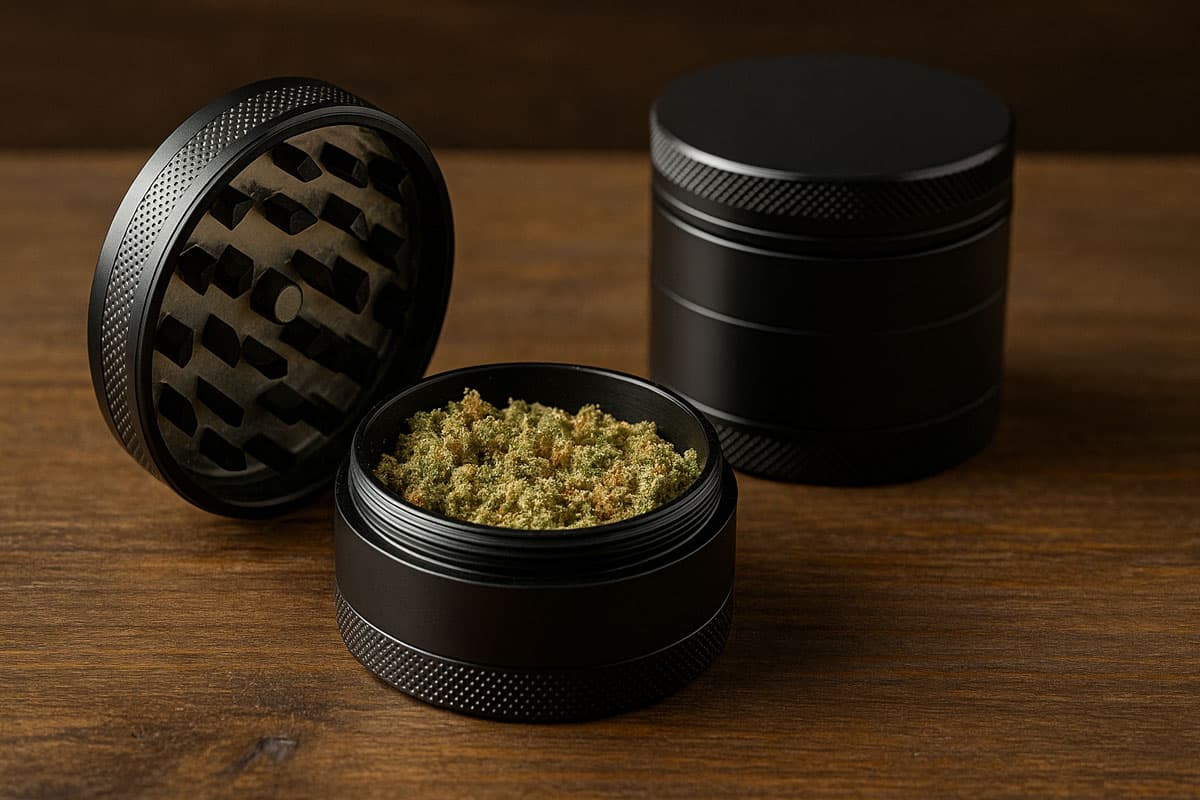
A three-piece grinder adds a separate collection chamber below the grinding section. As flower is shredded between the teeth of the top two pieces, the ground material falls through small holes into the storage chamber below — separate from the teeth and ready to be tipped into a bowl or onto a paper.
This separation is more useful than it sounds. It produces a more consistent grind because only pieces small enough to fit through the holes make it to the collection chamber, and it makes accessing your ground flower significantly cleaner and easier than digging around in a two-piece grinding chamber.
Best for: Regular users who want a meaningful step up from a two-piece without the additional complexity of a kief catcher. A practical, well-balanced option for everyday use.
Four-Piece Grinders
The four-piece design adds a fine mesh screen and a dedicated kief collection chamber at the very bottom. As you grind, the most potent material — the fine, powder-like trichome heads that constitute kief — passes through both the collection chamber holes and the fine mesh screen, accumulating in the bottom tray over time.
Most four-piece grinders come with a small scraper tool specifically for collecting this kief and using it to enhance a bowl or a joint. Over days and weeks of regular use, a four-piece grinder passively accumulates a meaningful amount of high-potency kief from the flower you’re already grinding — a genuine return on the additional cost of the design.
Best for: Regular consumers who want to capture every possible value from their flower. Anyone interested in collecting kief for enhanced sessions. The most complete grinder option for serious cannabis users.
Browse our grinders section at The Purple Leaf for currently available options across all types.

Grinder Materials — What Difference It Actually Makes
Metal — Aluminum, Stainless Steel, Titanium
Metal grinders are the dominant choice among regular cannabis consumers for good reason — they’re significantly more durable than any plastic alternative, their teeth stay sharp through years of use, and quality metal grinders produce a genuinely superior grind compared to basic acrylic options.
Aluminum is the most common metal grinder material. It’s lightweight, strong, and — when anodized — produces a smooth, non-stick surface that grinds effortlessly and cleans easily. The anodizing process hardens the aluminum and prevents any material transfer into your flower, which is worth confirming when evaluating any aluminum grinder. A quality anodized aluminum grinder is the most practical combination of performance, weight, and cost for most users.
Stainless steel is heavier than aluminum but essentially indestructible. A quality stainless steel grinder will outlast several aluminum alternatives through heavy daily use. The additional weight gives it a satisfying solidity that many users actively prefer. The trade-off is price — steel grinders cost more than equivalent aluminum options.
Titanium represents the absolute peak of grinder materials — as strong as steel but significantly lighter, often with advanced non-stick surface treatments. The price reflects this: titanium grinders are a genuine long-term investment for users who want to buy once and never replace.
Acrylic — The Budget Entry Point
Acrylic grinders are lightweight plastic devices that offer an accessible entry point for beginners or occasional users who aren’t ready to invest in metal. They’re inexpensive, available everywhere, and entirely functional for light use.
The limitations become apparent with regular use. Plastic teeth dull and can chip over time, producing a less consistent grind. The grinding action itself is typically less smooth than metal, requiring more effort for the same result. For occasional use or as a travel backup, acrylic is fine. As a daily driver, most regular users outgrow it quickly and wish they’d started with metal.
Wood and Hemp Plastic
Wooden grinders offer a distinctive aesthetic — they look genuinely beautiful on a surface and carry a traditional appeal that metal doesn’t replicate. Most use metal pins or inserts for the actual grinding teeth since wood teeth would dull almost immediately. The trade-off is cleanability — wood is harder to clean thoroughly than metal and doesn’t respond well to isopropyl alcohol soaks.
Hemp plastic grinders are an environmentally conscious alternative to standard acrylic — manufactured from compressed hemp fibre rather than petroleum-derived plastic. They biodegrade more responsibly than conventional plastic and offer a similar performance and price profile.
Teeth Design — Why It Matters More Than You’d Think
The teeth are the functional core of any grinder, and different tooth designs produce meaningfully different results.
Diamond-cut teeth — the standard in quality metal grinders — are precisely milled with multiple cutting edges that shred flower from several angles simultaneously. The result is a finer, more uniform, fluffier grind that burns more evenly and draws more easily than a coarser grind. Diamond-cut teeth are the reason quality metal grinders produce a noticeably better result than basic alternatives.
Peg teeth (also called shark teeth or pillar teeth) are simpler cylindrical protrusions that break flower apart through blunt force rather than precision cutting. They’re common in acrylic and basic wooden grinders and produce a chunkier, less consistent grind. Functional, but noticeably different from diamond-cut results.
When comparing grinders, diamond-cut teeth are the specification to look for in any metal option you’re considering seriously.
Grinder Size — Getting the Right Fit
Grinder diameter typically ranges from around 40mm (compact) to over 100mm (large format). The right size depends on how much you typically grind in a single session.
40–50mm grinders are compact and pocket-friendly — the most portable option and practical for grinding a single session’s worth at a time. The smaller chamber size means you’ll grind more frequently if you’re a heavy consumer, but for moderate users, this range hits the right balance of portability and capacity.
50–63mm grinders are the most popular everyday size — large enough to grind a meaningful amount in one go without becoming unwieldy. This is the range most regular cannabis consumers end up with and stay with.
75mm and larger grinders are suited to heavy consumers or group sessions where grinding larger quantities at once saves time. The larger footprint means they’re more of a home-use item than a portable one.
The Kief Catcher — Why It’s Worth Caring About
If you’re considering a four-piece grinder, the quality of the mesh screen in the kief catcher chamber is worth paying attention to.
The mesh is measured in microns — smaller micron numbers mean finer mesh that filters out more plant material and captures only the purest trichome heads. Quality grinders use mesh in the 150–200 micron range, which produces consistently cleaner kief than lower-quality coarser mesh.
A grinder with a good kief catcher accumulates meaningful amounts of collected material over weeks of regular use. That material — sometimes called “the good stuff” at the bottom of the grinder — is genuinely more potent than the flower it came from and rewards patience with a passive bonus that more than justifies the small premium of a four-piece design over a three-piece.
How to Keep Your Grinder Performing Well
Even a quality grinder degrades in performance without occasional cleaning. Sticky resin accumulates on the teeth, in the thread, and on the mesh screen — eventually making the grinder harder to turn and clogging the kief screen.
For metal grinders: Place in the freezer for 15–20 minutes first — the cold makes sticky resin brittle and easier to dislodge. Use a small stiff brush (many grinders include one for the kief screen) to remove loose material from all chambers. Soak in isopropyl alcohol for 20–30 minutes to dissolve remaining residue, scrub with a cotton swab or small brush, and rinse thoroughly with warm water. Allow to dry completely before reassembling.
For acrylic and wooden grinders: Avoid isopropyl alcohol — it can degrade acrylic and damage wood finishes. Use warm water and a mild soap with a brush instead. These materials require more frequent cleaning than metal to maintain smooth operation.
Regular cleaning — every few weeks for regular users — keeps any grinder performing at its best and extends its effective lifespan considerably. Browse our cleaner products at The Purple Leaf for available cleaning supplies.
Choosing the Right Grinder — A Quick Decision Guide
You’re new to grinding or on a tight budget: A two-piece acrylic or basic aluminum grinder is the right starting point. Get a functional grind without overcommitting financially while you figure out your preferences.
You want the best everyday grinding experience at a sensible price: A four-piece anodized aluminum grinder with diamond-cut teeth in the 50–63mm range is the practical recommendation for most regular cannabis consumers. This combination delivers consistent, quality results and passively collects kief — the best all-around choice.
You want to buy once and never replace it: A quality stainless steel or titanium four-piece grinder is the answer. Higher upfront cost, functionally indistinguishable from the best aluminum options, but genuinely built to last decades of daily use.
You need something for travel: A compact two-piece metal grinder — 40–50mm — is the most sensible choice. Durable enough to survive being thrown in a bag, small enough to not be annoying, inexpensive enough to replace if lost.
Pairing Your Grinder With the Right Flower
A quality grinder only delivers what the flower inside it has to offer. The most expensive grinder in the world produces mediocre results from poorly cured, dry, flavourless flower — and outstanding fresh flower is partly wasted when ground inconsistently.
Browse our full flower menu at The Purple Leaf — including indica, sativa, and hybrid strains across quality grades — for the starting material that makes every grind worthwhile.
For the most cost-effective way to keep a regular supply on hand, our budget ounce program starting at $20 delivers more flower per dollar than any other format on our menu.
Frequently Asked Questions
What type of grinder is best for cannabis?
A four-piece anodized aluminum grinder with diamond-cut teeth in the 50–63mm range is the best all-around choice for most regular cannabis consumers — consistent grind quality, kief collection, and durable enough to last for years. Browse our grinders section at The Purple Leaf.
What is kief and why should I collect it?
Kief is the fine, powder-like trichome material that falls from cannabis flower during grinding. It is more potent than the flower it came from and can be used to enhance a bowl or joint. A four-piece grinder with a fine mesh screen collects it passively during normal use.
What is the difference between a two-piece and four-piece grinder?
A two-piece grinder grinds flower in a single chamber with no separation. A four-piece grinder separates the ground flower from the teeth, provides a consistent grind through sized holes, and collects kief through a fine mesh screen in a dedicated bottom chamber.
How often should I clean my grinder?
Every two to four weeks for regular users. Metal grinders can be cleaned with isopropyl alcohol. Acrylic and wooden grinders should be cleaned with warm soapy water only.
What size grinder should I buy?
50–63mm is the most practical everyday size for most cannabis consumers — enough capacity for a full session without being unwieldy. Go smaller (40–50mm) for travel and portability. Go larger (75mm+) if you regularly grind for groups.
Where can I buy a cannabis grinder in London, Ontario?
The Purple Leaf carries grinders alongside a full range of cannabis accessories — papers, lighters, pipes, bongs, and cleaning supplies — available for local London, Ontario delivery and Canada Post shipping Canada-wide. Browse our grinders section at thepurple-leaf.com or call 519-777-9498 Monday to Friday, 9 AM to 8 PM EST.
Shop Cannabis Grinders at The Purple Leaf
The right grinder makes every session better — and The Purple Leaf has the accessories and the flower to complete the setup.
Buy weed online in Canada · Same-day weed delivery in London, Ontario on weekday orders placed before noon (12:00 PM EST).