

Hash is one of the oldest cannabis products in human history — and one of the most misunderstood in the modern legal market. While concentrates like shatter, live resin, and distillate have dominated the conversation around cannabis extracts since legalization, hash has quietly maintained a loyal following among experienced users who appreciate its unique character, complex flavour profile, and the centuries of tradition behind its production.
This guide covers exactly what cannabis hash is, the different methods used to make it, how it compares to other concentrates, and how to consume it properly.
What Is Cannabis Hash?
Hash — short for hashish — is a cannabis concentrate made by separating and compressing the trichomes from cannabis flower into a solid or semi-solid form. Trichomes are the resin glands that coat the surface of cannabis flower and contain the majority of the plant’s cannabinoids — THC, CBD, and others — alongside its terpenes.
The result of this separation and compression is a product that is more potent than flower, richer in cannabinoid content, and distinctively different in texture, flavour, and effect from any other cannabis product on the legal Canadian market.
Hash typically ranges from 30–60% THC depending on the quality of the source material and the production method — significantly more potent than flower but generally less so than modern solvent-based concentrates like shatter or distillate. What hash lacks in maximum potency it more than compensates for in flavour complexity, cultural depth, and the uniquely full-bodied experience that generations of cannabis users around the world have valued it for.
Browse our hash selection at The Purple Leaf — available with local London, Ontario delivery and Canada Post shipping Canada-wide.
A Brief History of Hash
Hash has been produced and consumed for over a thousand years — primarily in regions of Central Asia, the Middle East, and North Africa where cannabis has been cultivated as a crop for millennia. The Hindu Kush mountain range — spanning Afghanistan, Pakistan, and northern India — is considered the historical heartland of hash production, and the landrace cannabis genetics from this region remain the ancestral source of many of the most beloved indica strains in the modern legal market.
Traditional hash was produced by hand — rubbing live cannabis plants between the palms to collect the sticky resin, which was then compressed into balls or slabs for storage and trade. This method is still used in parts of South Asia today and produces what is known as charas or hand-rubbed hash.
In the 20th century, hash made its way into Western cannabis culture through the hippie trail and the global cannabis trade, becoming deeply embedded in European cannabis culture — particularly in countries like Morocco, which developed large-scale production of pressed Moroccan hash for export. The specific smell, flavour, and effect of traditional hash styles remains culturally significant to cannabis users who encountered it in this era.
The legal Canadian cannabis market has brought hash production into regulated, quality-controlled environments — producing a more consistent, accurately labelled, and safely tested product than the traditional market ever could.
How Is Cannabis Hash Made?
There are three primary methods of hash production, each with a distinct history, technique, and final product character.
Method 1: Dry Sift (Kief Pressing)
Dry sifting is the most straightforward hash production method and the one most familiar to home cannabis users who have used a multi-chamber grinder. Ground cannabis flower is agitated over a fine mesh screen — the mesh separates the trichomes from the plant material, allowing the fine, powdery trichome heads to fall through and collect below.
This collected powder is called kief — the same material that accumulates in the bottom chamber of a quality grinder. At scale, multiple screens with progressively finer mesh sizes are used in sequence to refine the kief and remove increasingly small amounts of plant material, producing a purer and more potent final product.
The collected kief is then pressed — using heat, pressure, or both — into the solid blocks or slabs that most people associate with traditional hash. Cold-pressing produces a lighter-coloured, more crumbly product. Warm-pressing with controlled heat produces a darker, denser, more pliable hash that has better structural integrity.
The quality of dry sift hash is determined primarily by the quality of the source flower and the fineness of the screens used. Premium dry sift — sometimes called full-melt dry sift — is collected exclusively from the smallest, purest trichome heads and melts completely when dabbed, leaving no residue. Lower-grade dry sift contains more plant material and produces a more traditional hash experience with a darker colour and stronger plant-forward flavour.
Method 2: Ice Water Extraction (Bubble Hash)
Ice water hash — also called bubble hash or water hash — is produced by agitating cannabis flower in ice-cold water, which causes the trichomes to become brittle and break off from the plant material. The mixture is then filtered through a series of progressively finer mesh bags — called bubble bags or micron bags — that separate the trichomes by size.
The finest mesh bags — typically 73–120 micron — collect the purest, highest-quality trichome heads. This material is dried carefully and either consumed directly as loose hash or pressed into slabs. The name “bubble hash” comes from the characteristic bubbling that high-quality product produces when exposed to heat — a reliable indicator of trichome purity and low plant material content.
Ice water hash is the foundation of the premium solventless concentrate market. As detailed in our guide to hash rosin, the highest-quality bubble hash is further processed by pressing with heat and pressure into hash rosin — the most sought-after solventless extract available in the legal Canadian market. Browse our hash rosin selection for the premium solventless option.
The quality grades of bubble hash are typically expressed by micron size — different mesh sizes collect trichomes of different diameters, with the finest grades producing the cleanest, most potent product. Full-melt grade bubble hash — collected from the 73–90 micron range — is considered the premium tier, producing a completely clean melt with no charring or residue.
Method 3: Hand-Rubbing (Charas)
Hand-rubbed hash is the most traditional and labour-intensive production method — and the one with the deepest historical roots in cannabis culture. Live cannabis plants — typically harvested just before peak ripeness when resin production is at its highest — are rubbed vigorously between the palms of the hands. The sticky resin adheres to the skin and is then scraped off and rolled into small balls or pressed into slabs.
The resulting product — called charas in South Asian tradition — has a distinctive, pungent aroma and a dark, slightly oily character that reflects the live plant material from which it was derived. Charas is particularly associated with the Himalayan foothills of India — specifically the Parvati Valley and the Kullu region — where it has been produced by local farmers for centuries using traditional techniques.
Hand-rubbed hash is not widely produced at commercial scale in the legal Canadian market due to the extreme labour intensity of the process — but it remains culturally significant and is the template from which all modern hash production evolved.

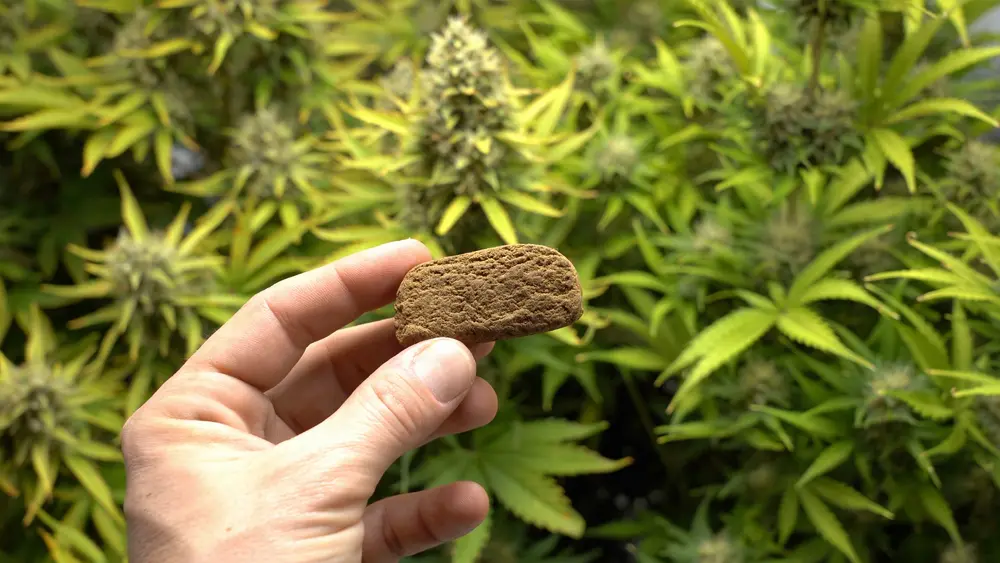
What Does Hash Look and Feel Like?
Hash varies considerably in appearance, texture, and consistency depending on the production method and source material.
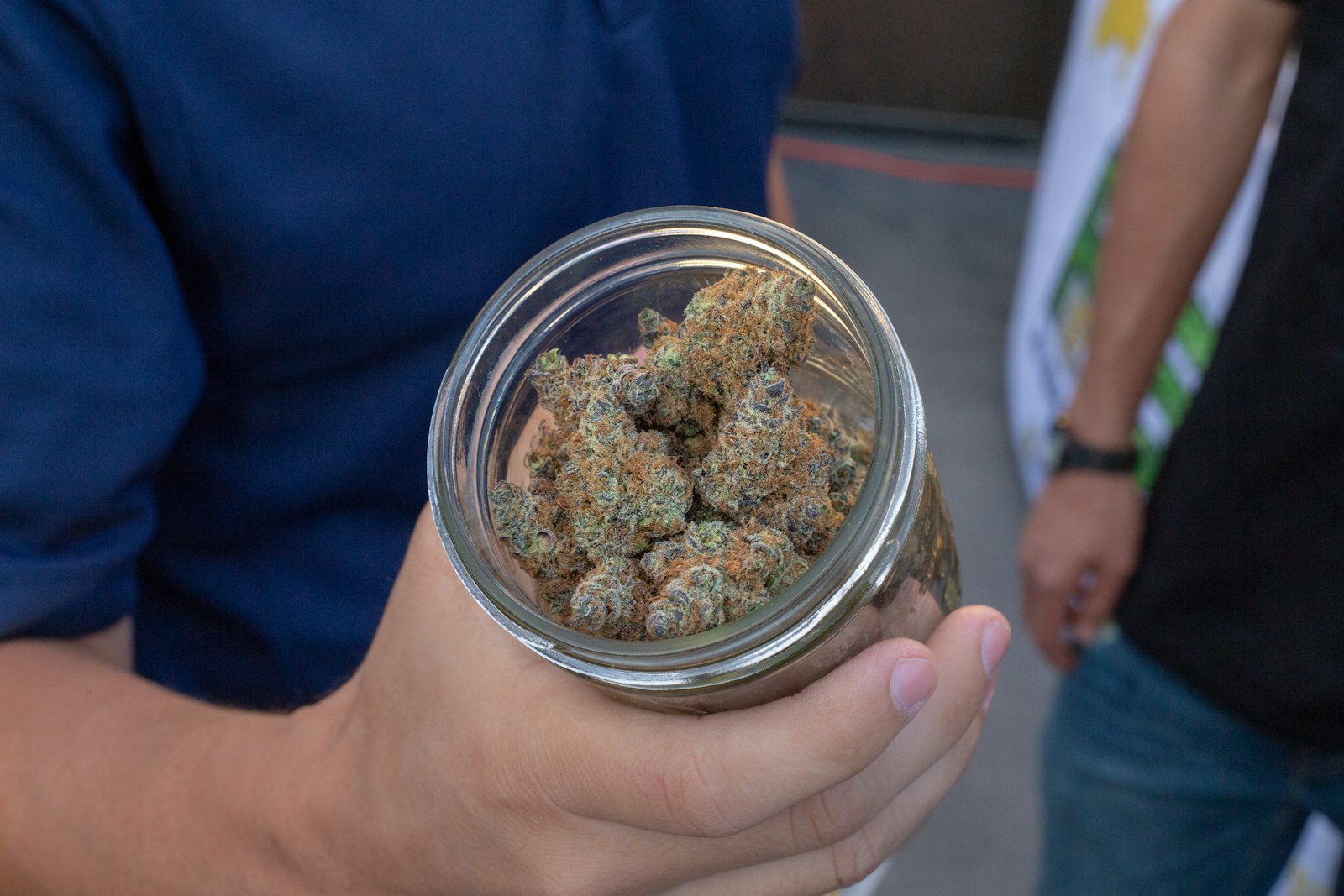
Colour ranges from light golden or blonde — typical of high-quality dry sift from well-grown flower — through amber, brown, and dark green to near-black in lower-grade pressed material with higher plant content. In general, lighter colour indicates higher trichome purity and lower plant material content, while darker colour can indicate either high-resin traditional product or lower-grade material with significant vegetable contamination.
Texture varies from crumbly and dry — typical of well-pressed dry sift — to soft and pliable — typical of warm-pressed traditional hash — to sticky and oily — typical of freshly made hand-rubbed charas. High-quality bubble hash before pressing has a sandy, granular texture. After pressing, it becomes more cohesive and solid.
Aroma is one of the most distinctive qualities of quality hash — rich, complex, and distinctly different from dried flower. Well-made hash preserves a remarkable terpene complexity — earthy, spicy, floral, and resinous notes combine in a way that is unmistakably hashish and unlike any other cannabis product format.
How Does Hash Compare to Other Concentrates?
Understanding where hash sits in the broader concentrates landscape helps you make an informed purchase decision.
Hash vs Shatter: Shatter is a solvent-based extract with significantly higher THC content (70–85%) than most hash (30–60%). Shatter delivers maximum potency with a clean, stable texture. Hash delivers a more moderate, complex, full-bodied experience with greater cultural and historical depth. For users who prioritise potency and efficiency, shatter is the more powerful option. For users who value flavour complexity and the traditional cannabis experience, quality hash is often the more satisfying choice.
Hash vs Live Resin: Live resin is the terpene-preservation benchmark of solvent-based concentrates — extracted from freshly frozen plants to capture the full aromatic profile of the living plant. High-quality hash made from premium fresh-frozen material can rival live resin’s terpene expression, but live resin typically offers higher potency and the specific flavour clarity of a single-strain extraction. Browse our live resin selection for comparison.
Hash vs Hash Rosin: Hash rosin is produced from bubble hash — it is the next step up in the solventless production chain. While hash is consumed directly, hash rosin is pressed from hash and delivers a more concentrated, refined version of the same source material’s character. For users who have tried hash and want to explore the premium solventless tier, hash rosin is the natural progression.
Hash vs Distillate: Distillate sits at the opposite end of the concentrate spectrum from hash — maximum THC isolation, neutral flavour, minimal terpene content. Hash is a full-spectrum product. Distillate is a refined single-compound extract. They serve very different purposes and appeal to very different users.
How Is Hash Consumed?
Hash is one of the most versatile cannabis products in terms of consumption methods — it can be consumed in more different ways than almost any other product format.
Smoking in a Joint or Pipe
The most common consumption method for hash across its long cultural history. Small pieces or crumbles of hash are mixed with tobacco or cannabis flower and rolled into a joint, or packed into a pipe bowl. The hash adds potency and flavour complexity to the base material and burns slowly for an extended session.
In the legal Canadian market, mixing hash with tobacco is less common than the European tradition — most Canadian users mix hash with their cannabis flower instead, combining the complementary flavour profiles of the two products for a richer, more complex smoking experience.
Adding to a Pre-Roll
Crumbling small amounts of hash over ground flower before rolling — or pressing a thin layer onto the outside of a rolled pre-roll — significantly increases the potency and flavour complexity of the joint without requiring any additional equipment. This is a popular format for experienced hash users who want a convenient, ready-to-smoke experience.
Dabbing
Higher-quality hash — particularly full-melt bubble hash — can be consumed on a dab rig in the same way as other concentrates. The hash is placed on a heated nail or banger and vapourised for inhalation. Full-melt grade hash is specifically rated for this purpose — lower grades that contain more plant material will leave a char residue on the banger rather than vapourising cleanly.
For users who want to explore dabbing hash, pairing it with quality hash rosin for comparison sessions is one of the most educational exercises in the concentrates category — the two products from the same source material reveal what the pressing process adds to the experience. Browse our dab rigs and tools at The Purple Leaf for currently available equipment.
Vaporizing
A quality dry herb or concentrate vaporizer can be used to consume hash at controlled temperatures, preserving more terpene content than combustion and producing a cleaner, more flavourful experience. Low-temperature vaporization — below 200°C — is recommended for terpene preservation in hash.
Is Hash Right for You?
Hash occupies a unique position in the cannabis product landscape — it is more potent than flower but less intense than modern high-THC concentrates, making it one of the more accessible cannabis extracts for users who are ready to explore beyond flower but not yet ready for the full intensity of a dab.
Hash is well-suited to you if:
- You have some cannabis experience and are comfortable with moderate to high-THC products
- You appreciate flavour complexity and the full-bodied character of a terpene-rich concentrate
- You want to explore cannabis history and tradition through the product that has defined the culture for centuries
- You want a versatile product that can be consumed in multiple formats
- You are ready to step beyond flower but find the intensity of shatter or live resin dabs too significant a jump
Hash is not well-suited to you if:
- You are a first-time or very occasional cannabis user
- You have never established your personal cannabis tolerance and limits
- You are looking for maximum THC potency — shatter, live resin, and distillate all exceed what hash can deliver in this department
Not sure where to start? Our team at The Purple Leaf is available Monday to Friday, 9 AM to 8 PM EST, at 519-777-9498 — always happy to help you navigate the concentrates menu and find the right entry point for your experience level.
Frequently Asked Questions
How is cannabis hash made? Hash is made by separating the trichomes from cannabis flower using one of three main methods: dry sifting through mesh screens, ice water extraction (bubble hash), or hand-rubbing live plants. The collected trichomes are then compressed into solid blocks or slabs. Browse our hash selection at The Purple Leaf.
What is the difference between hash and kief? Kief is the loose, powdery trichome material collected from cannabis flower — it is the raw material from which hash is made. Hash is kief that has been compressed and processed into a more solid, cohesive form. Both are available through the legal Canadian market.
How strong is cannabis hash compared to flower? Hash typically ranges from 30–60% THC compared to 15–30% for premium cannabis flower. It is significantly more potent than flower but generally less so than modern solvent-based concentrates like shatter (70–85% THC) or distillate (85–95% THC).
How do you smoke hash? Hash can be mixed with cannabis flower in a joint or pipe, crumbled over a pre-roll, dabbed on a rig (full-melt grade), or vaporised in a compatible device. Mixing with flower in a joint is the most accessible and widely used method for new hash users.
Is cannabis hash safe to buy in Canada? Yes, when purchased from a licensed retailer. All hash products at The Purple Leaf meet Health Canada’s mandatory testing requirements for potency, pesticides, and contamination.
Where can I buy cannabis hash online in Canada? The Purple Leaf carries cannabis hash available for Canada Post shipping to every province and territory in Canada. Browse our hash selection at thepurple-leaf.com or call 519-777-9498 Monday to Friday, 9 AM to 8 PM EST.
Shop Cannabis Hash at The Purple Leaf
Whether you’re a long-time hash enthusiast or curious about trying it for the first time, The Purple Leaf has you covered. Browse our hash selection alongside our complete concentrates menu — including shatter, live resin, hash rosin, distillate, and crumble — at thepurple-leaf.com, or call us at 519-777-9498 Monday to Friday, 9 AM to 8 PM EST.
New customer? Subscribe to our newsletter and use code PRIMETIME for 10% off your first order.
The Purple Leaf — London, Ontario’s trusted cannabis dispensary. Licensed, tested, knowledgeable. Local delivery available. Ships across Canada.
Buy cannabis concentrates online in Canada · Same-day weed delivery in London, Ontario on weekday orders placed before noon (12:00 PM EST).